

Violence is a mass problem within public schools in the United States. The Federal Bureau of Investigation (FBI) released data from 2020 to 2024 showing how “more than one million incidents” were reported “occuring at school locations”. However, physical violence is not the only contributor to the nationwide concern.
The principals of the three main Missoula County Public High Schools (Sentinel, Hellgate, and Big Sky) collectively agree that incidents regarding verbal threats and vandalism are two of the main factors that contribute most to “that… feeling of being unsafe in your school”.
Big Sky Principal Jennifer Courtney and Sentinel Principal Stephanie Thennis agree that they are “very rarely” made aware of verbal threat cases unless they are reported directly or sent from an anonymous tip. Hellgate Principal Judson Miller states that the majority of threat cases reported to him are regarding posts made over social media.
Picture of the lockdown procedure sheet (Miranda Hart)Based on the severity of the threat (online or in-person), it may require a conversation with the student who made the threat and a possible lunch detention. Major consequences are less common due to the facts of the situation often being unknown. When a severe enough incident does occur or a single student is involved in multiple incidents, the case may advance to an MCPS threat assessment.
Thennis explains that a threat assessment begins with a group “consisting of social workers, teachers, [and administration]” and many others sitting down and combing through the facts of the situation. It also requires an interview with the student, their parents/guardians, friends, or any other people that may have been involved. During the time the assessment is being processed (an estimated two to three days), the suspected student will be placed on out-of-school suspension.
Whereas serious verbal threats are less common, cases of vandalism are abundant within all three high schools.
The majority of vandalism seen in the high schools is minor, but still frequent. All three principals stated during their interviews that they see cases of minor vandalism as often as once a week. These cases typically included graphic drawings or inappropriate language in what Thennis referred to as the “hot spot” of vandalism: the school bathrooms.
Although there is little concern for student safety regarding this minor vandalism, the frequency of the vandalism requires there to be direct punishment to the student body. The most common consequence is the shutdown of the bathroom being vandalised.
These cases can also go beyond writing and drawing. Carson Tabish, a reporter for Big Sky’s newspaper (The Sun Journal), wrote about incidents where “sinks and urinals” were removed from the walls, as well as a specific case in which students clogged a toilet with corndogs.
Similarly, Thennis recalled a recent incident in the boys locker room where cooked chicken was shoved inside of the paper towel rolls.
Although these situations may seem relatively harmless, labeling them as such encourages students to test how far they can push these “pranks” and ignores the impact they have on custodial staff. Miller described in an interview how the custodial staff of the high schools are “overworked” and “stretched thin” by the day-to-day upkeep of the school. This leaves no time or energy left for the poor decisions of students that can take anywhere from hours to days to clean.
Because of this, repercussions often include denying access to the locker rooms during class periods and requiring students to keep their gym clothes elsewhere where they would normally be stored in the locker room cubbies.
The most severe vandalism comes from special traditions known as Junior Takeover Day and senior pranks. Junior takeover day (or JTOD) involves the upcoming senior class rallying together the day after the seniors graduate to march the halls of the school and claim their place as the new seniors. Junior takeover day for Sentinel’s 2026 graduating class consisted of blocking off parking lots with their cars, playing games, and blowing bubbles in the empty lot. They also wrote and drew on cars around the campus.
Junior student Cloud Deneen recalls how some people “parked a few blocks away specifically so their car wasn’t written on” and were angry to find that their car had been found and drawn on regardless. These actions did not go unpunished, and students were ticketed due to the crudeness of the vandalism.
The content of the writing is the largest concern for Thennis. She described how every year the school receives phone calls from concerned parents regarding the inappropriate content, and the constant ruckus of the tradition has led to her being unable to “support JTOD activities on campus for safety and education reasons”.
Thennis also described multiple cases of senior pranks that were taken too far. One prank involved students of the 2024 graduating class egging the inside and outside of Sentinel with an estimated 380 eggs. This situation created tripping hazards, required mass cleanup, and forced three students to be sent home due to their severe egg allergies. She also reported one case in which students broke and trespassed into the school during the night to enact their prank. This resulted in students facing fines and charges for their actions.
Miller believes that “no prank is harmless” and stresses the importance of forgoing a senior prank “around this time of year”. This mindset stems from a prank that involved students, while under the influence of drugs and alcohol, attempting to scale the school building to reach the roof.
Many students fell while attempting to climb which resulted in multiple student deaths.
School administration is constantly encouraging students to prioritize safety and consider how a decision may impact their reputation, their record, their diploma, and their life. Thennis stresses how restricting access to the bathrooms is “the last thing [administration wants] to do”, but it has become necessary because “we have to keep our school safe”. Miller wishes senior pranks could be fun but he’s seen how all it takes is “…one bad slip, one bad choice, and pretty soon we’re sitting around with law enforcement or worse dealing with something… catastrophic”.
In order for students to improve their environment, they must take into consideration how their poor decisions warrant negative reactions from administrators and how it impacts the entire student body.
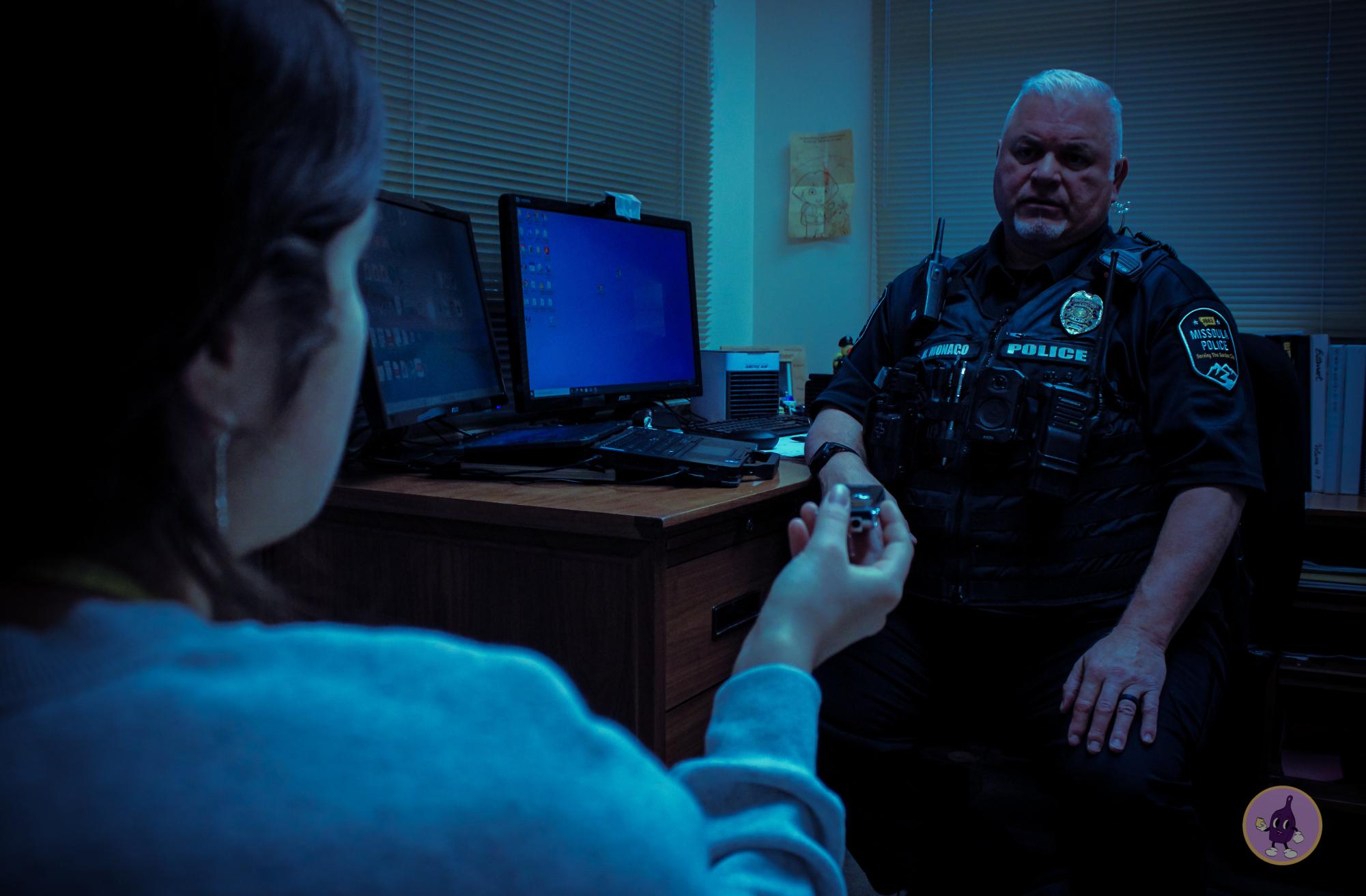
While vandalism and verbal threats contribute to a negative school environment, more severe behaviors can lead to more dangerous situations that involve things like weapons. In Missoula high schools, weapons are predominantly reported in the form of pocket knives. According to Sentinel High School’s School Resource Officer (SRO) Mark Monaco, this reality is often tied more to local culture than malicious intent.
“What I’m saying is, not to typecast anybody, but this is Montana,” Monaco said. “You have a lot of people that carry knives in their pockets that are pocket knives. Not carrying with intent. It’s just more out of habit.”
Several students confirmed this claim, often expressing little concern about carrying knives. One student, speaking anonymously, said, “A lot of people carry pocket knives and stuff including me, but that’s mostly just a tool in my eyes”.
In a state with strong rural and outdoor traditions, it’s not seen as uncommon to be holding a knife on your person. However, this cultural norm does not override school policies, most of which are “zero-tolerance”. Anything that could be seen as a threat is treated as one, regardless of intent. “We got that set of rules,” Monaco affirmed, “and they’re always looked at all the time to see how we can make it better… very rarely have I ever seen a rule dismissed, and that’s that.”
Due to the extreme overwhelming threat of school shootings that has been an increasing problem around the nation, schools have implemented an official lockdown procedure that most facilities use. The “I Love U Guys” standard response protocol was adopted by all MCPS schools two to three years ago.
The procedure contains the five basic steps for what should be done in an extreme situation: hold, secure, lockdown, evacuate, and shelter, but not all schools can enact these policies to the extent they were meant to be executed. Every school has a unique structure and design, which complicates the effectiveness of the protocol.
At Big Sky High School, students pointed out that the school’s design could create vulnerabilities during a lockdown. One student noted that many classrooms feature interior-facing windows, which complicate efforts to secure rooms quickly. “I think the way our school is set up, it’s not great for [an active shooter] situation. Every class has a wall of windows pointed to the hall so it takes a lot longer to close all of the blinds than it would in a classroom without the windows. A lot of classes don’t have a great spot to sit because there’s a ‘core’, which is a teacher area between classrooms, so there’s multiple possible entrances.”
Hellgate High School students expressed similar concerns, describing parts of the building as “weak zones” that could be difficult to secure. One student who resides in an exposed area throughout most of the school day stated, “I don’t think I’d be safe in a lockdown situation” and would feel “pretty safe” anywhere else. Another Hellgate student emphasized the emotional weight of these concerns, stating, “I worry about stuff like this because it’s so real. There’s always that ‘what if.’ Like, what if it happens today? Tomorrow?”
Missoula high schools – particularly Hellgate – have experienced several safety scares throughout the last few years. The past has revealed that more times than not, lockdowns in the area are not caused because of knives, but because of gun and bomb threats. While Montana has experienced far fewer school shootings than many other states, the national impact of such violence has shaped safety policies across the country.
Many of the procedures now standard in schools, including the “I Love U Guys” protocol, were developed in response to past tragedies such as Columbine, Sandy Hook, Uvalde, and Virginia Tech. These events continue to influence how schools prepare for emergencies today.
Statistics from 1966-2025 have helped build knowledge on what shootings usually entail. As of December 11, 2025, around 67.2% of shootings from this timeline occurred at high schools, with 11.02% happening at middle schools, and 21.77% at elementary schools. Around 509 shooting events have happened since 1966, with the number continuously growing.
While school administrators continue to review safety policies and emergency procedures, student behavior remains a significant factor in shaping a school’s environment. Incidents involving vandalism, threats, and other disruptive actions -whether intended as jokes or not- can escalate into something far worse.
As districts work to improve their preparation and prevention for these situations, addressing everyday student conduct both on and off campus remains an ongoing challenge in reducing negativity and maintaining a safe learning space.