



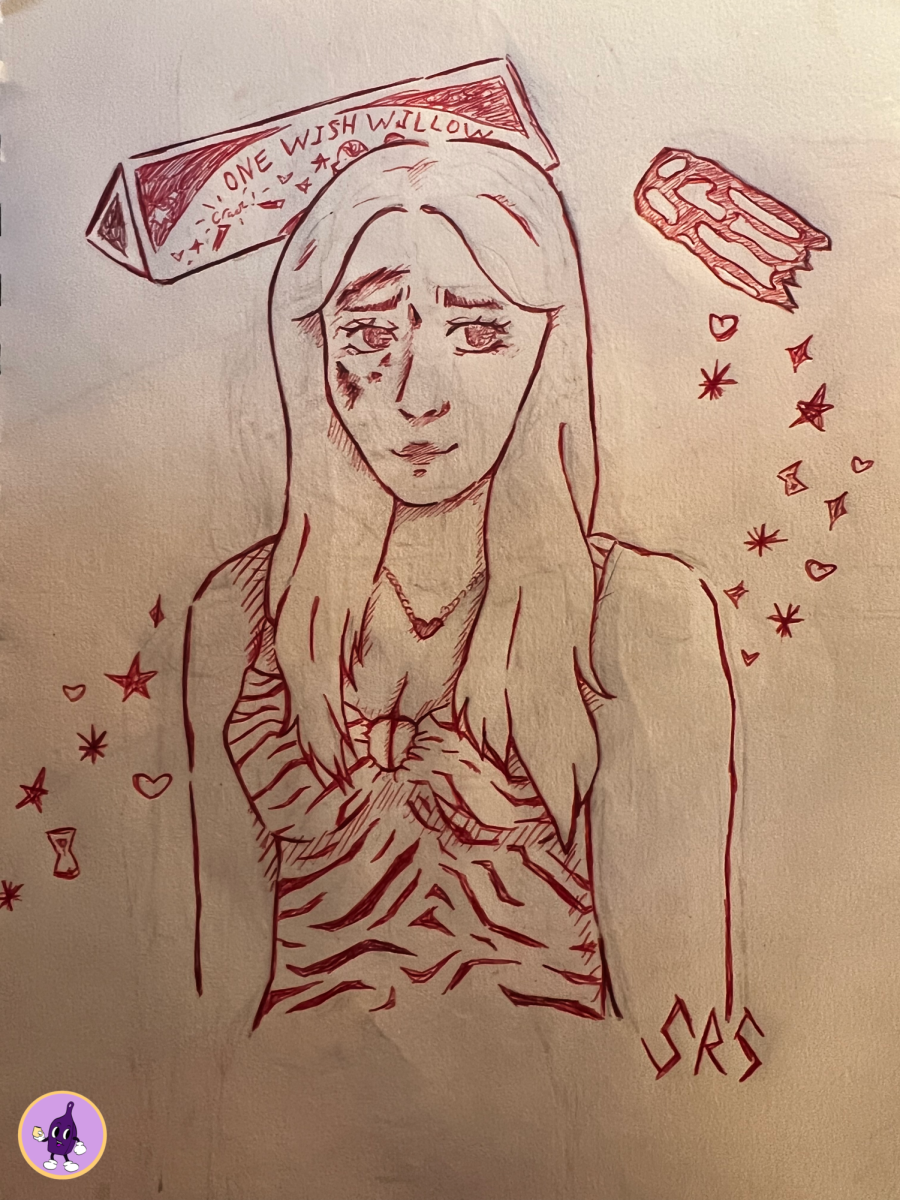
The new horror film “Obsession” is the hit of the season, everyone seems to be obsessed, but why? It’s fun, terrifying and genuinely unsettling. Jump scares rely on dark lighting, clever blocking, and visual effects. The unpredictability builds suspense and surprise. The film is uncertain and doesn’t originally have a clear conflict on what exactly is wrong.
Bear, one of the main characters, wants his best friend to like him back. He goes to a magic shop to purchase an item to make a wish for his best friend to be in love with him. This wish works and his best friend, called Nikki in the movie, tells Bear she likes him back. Bear and Nikki start to date, but several months into their relationship, Nikki starts acting very odd and becomes very controlling and obsessive of Bear.
The spell activates instantly. When the wish takes hold, Nikki’s free will is harshly stripped away. She transforms into a hyper-fixated, terrifyingly devoted partner whose affection turns into violent madness. The true horror hits when Nikki shortly snaps back to reality during her sleep, weeping and begging Bear to kill her. That was a harsh reminder that the real victim of this “romance” is Nikki, trapped inside a prison of Bear’s making by his wish.
Nikki’s vibrant personality vanishes, replaced by an eerie, overly eager devotion. She is rewritten or possessed by an entity designed completely to mirror Bear’s desires and needs.
Nikki’s attempts to fulfill the wish become grotesque. She creates a disturbing memorial for Bear’s dead cat and even attempts to cook the pet’s meat into a sandwich to prove her love which is a clear sign that her human agency has been entirely suppressed. Bear finally acknowledges that he does not want this forced fantasy. He learns that the wish cannot be canceled; the only way to free Nikki from the spell is through his own death.
In the end, Bear commits suicide by overdosing on pills in his bathroom. The moment his heart stops, the spell breaks, and the real Nikki snaps back into consciousness. The film ends with the horrifying frame of Nikki screaming in a blood splattered room, left as a deeply traumatized survivor of a crime she had no control over.
What separates Obsession from a generic horror film is its sharp critique of modern dating culture. The movie serves as an intense psychological analogy for the “manosphere” and the toxic concept of romantic dependency. Bear isn’t a traditional heroic protagonist; he is a pathetic, entitled and foolish, who bypasses Nikki’s basic human consent to force a relationship.
Overall, Obsession provides a gripping look into the dark side of human desire. The film successfully shows how an intense focus on one person can destroy lives and relationships. By analyzing the main characters’ actions, it becomes clear that passion easily turns dangerous without self control. This piece serves as a powerful warning about the thin line between love and fixation. It remains a highly relevant read for understanding toxic behavior in modern relationships.