



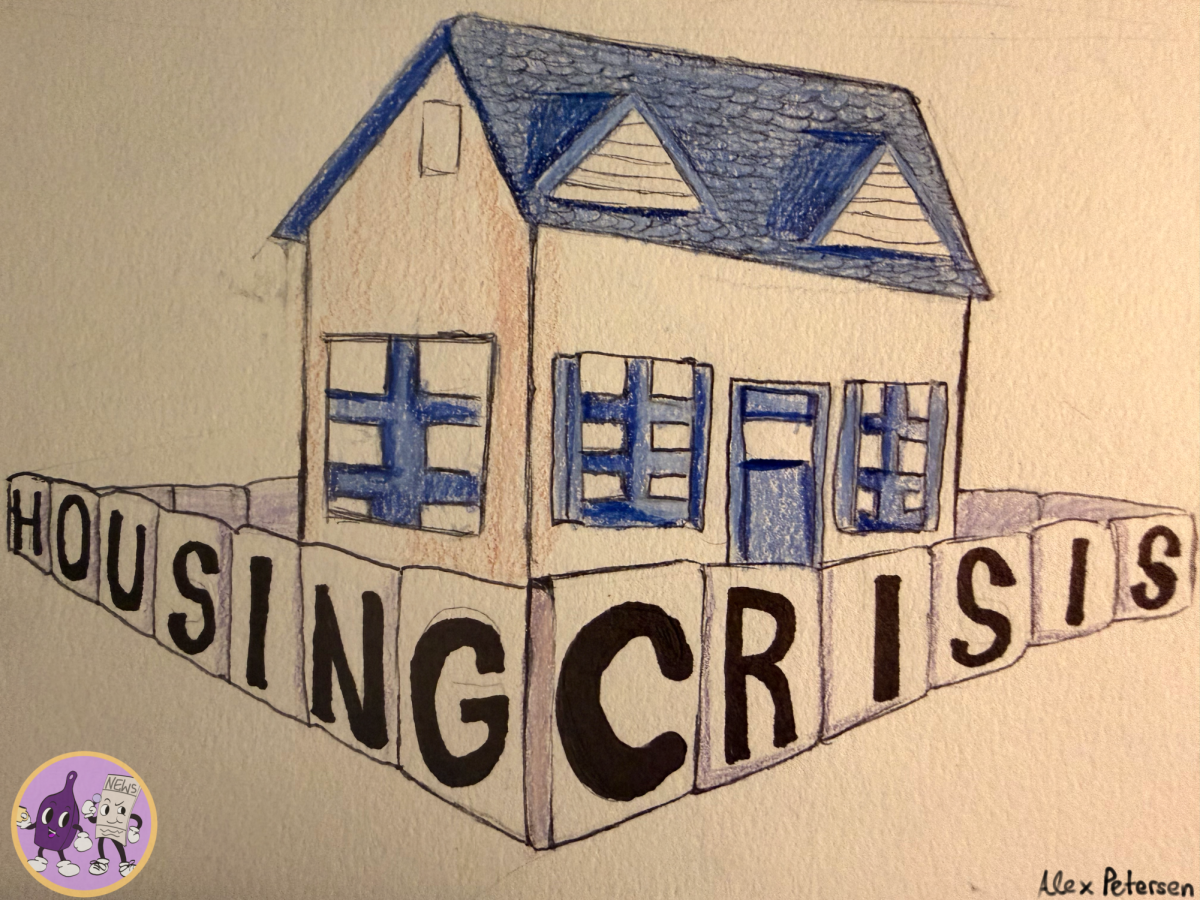
President Trump’s immigration policies – more specifically mass deportations and stricter lending – are creating conflicting effects on the U.S. economy. The White House has reported declining home prices in some cities with large migrant populations. Experts warn that reduced immigrant labor in construction will likely increase building costs and worsen supply shortages.
Across the nation, there is a shortage of around 7.3 million homes that are available to people with the lowest incomes. This shortage stems from market failure as the private market cannot reliably build, operate, and maintain rental housing with prices low enough for people to afford without federal assistance.
However, both the first and current Trump administrations have proposed several policies that have placed targets on immigrants, which would make it harder for the United States to ensure that the people have access to affordable housing. Within his policies that have been drafted, people have noted:
- In an executive order, President Trump directed federal agencies to prevent sanctuary jurisdictions from receiving federal investments. If this executive order is used to deny states and localities access to housing, it would undermine the local governments’ ability to prevent and address homelessness.
- The Trump administration rescinded guidelines that prohibit immigration enforcement from arresting undocumented people in protective areas. These areas are locations where U.S. Immigration and Customs Enforcement (ICE) and Customs and Border Protection (CBP) generally restrict enforcement actions. This action will deter people from seeking assistance when they need help and leave them with no place to go.
- During President Trump’s first term, he proposed to force mixed-status immigrant families living in the U.S. The Department of Housing and Urban Development assisted housing to choose between separating as a family or potential homelessness. Under a new executive order, the Trump administration has cancelled contracts with refugee resettlement agencies in order to help access housing.
Immigrant workers contribute an estimated 34 percent of those who work in construction according to the American Community Survey in 2023. In 2024, the National Association of Home Builders & Wells Fargo Housing Market Index reported acute shortages with particularly high rates of immigrant workers, specifically bricklayers and masons. Within that report, they also found that some states are even more reliant on immigrant construction workers.
Deporting these immigrant workers, more specifically in California, Texas, Florida, and New York will decrease the size of the labor force, slowing down housing construction, raising costs, which will ultimately decrease the number of new homes that can be built.
Working Families Tax Cut Act
The “Working Families Tax Cut Act,” originally called the One Big Beautiful Bill Act (OBBBA) – signed into law on July 4, 2025 during President Trump’s second administration – is a legislative package that focuses on permanent tax cuts, border security, and deregulation.
The goal of the OBBBA is to extend the 2017 tax cuts, eliminate taxes on tips, overtime, and Social Security, reduce corporate taxes, and fund border wall completion. However, critics highlight that it cuts over $1 trillion from social programs to fund tax breaks.
Medicaid is the single largest health insurer for children within the United States, covering for nearly 40 percent of all children nationwide. Black people make up an estimated 14 percent of the U.S. population, but accounts for 20 percent of Medicaid enrollees, with more than 60 percent of Black children enrolled in the program.
The OBBBA makes it so around 15 million people lose access to health insurance due to cuts to Medicaid through the Affordable Care Act. A majority of these people will be racially discriminated against due to how the OBBBA is written.
Immigration Enforcement Impacts
ICE also impacts the U.S. housing crisis through a dual effect: raids and deportations reduce labor, slowing new home construction, and creating potential for localized vacancy, while immigration levels drive demand. The impact is complex, affecting both the rental affordability and construction labor availability.
With stricter immigration enforcement, it reduces the availability of the labor pool, as immigrants comprise roughly 30 percent of the U.S. construction workforce. Deportations often result in labor shortages that slow new home construction, worsening the overall housing shortage.
Immigration has significantly driven rental demand, with some reports citing it responsible for up to two-thirds of demand growth in some regions of the United States. However, increased ICE activity, such as raids or deportations, can reduce occupancy in specific rental sectors. Some of these areas include multifamily buildings or immigrant communities.
While some argue that reducing the amount of immigrants frees up the housing supply, studies have shown that the contribution of undocumented immigration to housing costs is small compared to other factors.
Conclusion
While immigration increases the housing demand, the crisis is fundamentally caused by the chronic, decades-long under supply. While some studies show that immigrants drive up rent, they also make up around 34 percent of the site personnel, meaning deportation efforts can increase costs by shrinking the labor supply.
Immigrant labor is an essential part to reducing the housing shortage. Stricter immigration enforcement and deportations reduce the construction workforce, which causes projects to stall and reduces the number of new homes built, while increasing the affordability of homes depending on the location of where they are leaving from and going to.
There is no simple solution, but action needs to be taken in order to address people’s concerns about this topic.