



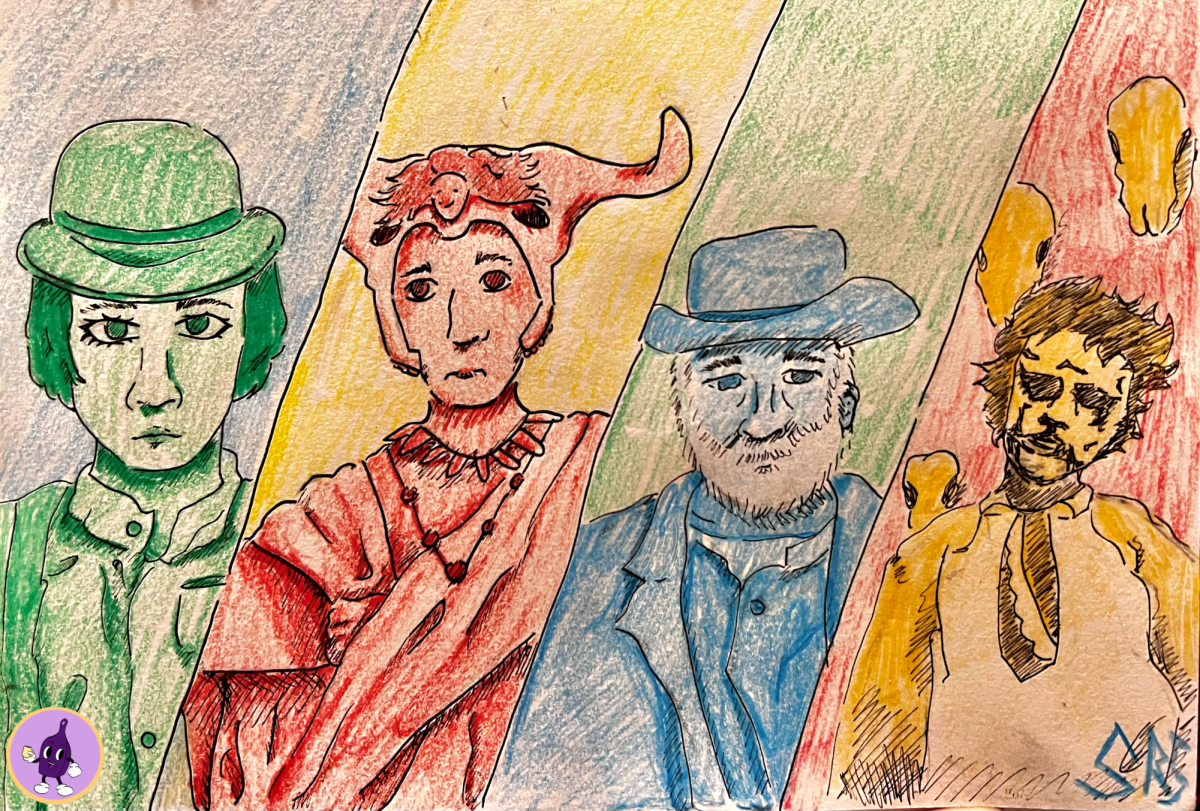
Movies are a form of media like any other. They provide entertainment, information, and themes to the viewer in a presentable format, much like art and books. It’s because of this freedom of expression that movies, like all other forms of media, are prone to controversy. People have been pointing video cameras at things since 1888, so it’s understandable that somewhere in the timeline, someone would make something that everyone wasn’t too fond of at least once.
Some of these controversial films are well-known, but some have been buried by the media because of their controversy. So today, I’d like to take a closer look at some movies that have been remembered in history for unfavorable reasons.
The Birth of a Nation (1915)
At first glance to the modern audience, The Birth of a Nation doesn’t seem like a film with much substance at all. As a three hour long drama from the silent film era, one may struggle to see how it can portray a message. Before discussing its material, the technological significance of the film must first be understood.
The Birth of a Nation was one of the most technologically advanced films of its time. It broke boundaries with its length, its soundtrack (it was the first movie to have an original composed score), and its filming techniques which utilized close-ups, fade-outs, and the use of extras, allowing many, many films to follow.
The issues arise when looking at the story. The Birth of a Nation chronicles the history of the infamous white supremacist group the Ku Klux Klan. In this dramatic retelling, the film glorifies the Klan, painting them as heroes that protected society from African Americans, who are portrayed as racist stereotypes (alongside the fact that most of them are being played by white actors in blackface).
The Birth of a Nation was a commercial success upon release, making it one of the highest grossing films of all time when adjusting for inflation. The film also, however, ended up reviving the Ku Klux Klan, causing it to gain the most members it has ever had in the 1920s. The Birth of a Nation is, without a doubt, the most racist movie to come out of Hollywood, and although it should be recognized for the technological standards it set for cinema, that’s about all it should be applauded for.
The Triumph of the Will (1934)
Following the theme of propaganda films, The Triumph of the Will is a German film commissioned by Adolf Hitler. The film is a glorification of the Nazi party and its ideals, and following the invasion of Poland five years later, I can’t exactly say it didn’t succeed in preaching its views. That’s about the extent of the controversy. It was a small piece of one of history’s biggest issues, and although not the direct cause, it is horrific nonetheless.
Lolita (1962) and Lolita (1997)
Two adaptations have been made of Vladimir Nabakov’s 1955 novel Lolita, which tells the story of a middle-aged French professor’s infatuation with a 12-year-old girl. I don’t think I need to explain why this raised concerns. Both movies follow the book’s plot closely, so controversy was soon to follow, but something additional taints the reputation of Stanley Kubrick’s former film.
A 2020 article accused producer James Harris of having sex with Lolita’s actress Sue Lyon during filming, when she would have been only 14 years old. While he has not directly responded to this claim, he has mentioned in interviews that he was “exposed to temptations” and that “his destruction as a person dates from that film”. This doesn’t help the reputation of an already extremely controversial piece of media.
A Clockwork Orange (1971)
Once again, Stanley Kubrick set out to test the waters. Adapted from the 1962 novel of the same name, A Clockwork Orange follows the story of Alex DeLarge, a teenager with a fondness for “rape, Beethoven, and ultra-violence” in a dystopian Britain. The film chronicles not only his early delinquent actions, but also his eventual unethical mental reforming by the government. It’s because of this that the film has been the subject of critical acclaim and major criticism.
Most of the attention is focused on the “ultra-violence”. While it is not particularly offensive by today’s standards, 1971 had a much different audience with different exposures. Kubrick also cuts away from the sexual assault scenes, leaving more to be implied by the viewer, which lessens the blow but still leaves an incredible impact. Criticism was also pointed at the government’s control and manipulation of the youth, so not too unfamiliar to some Orwellian ideas. It was withdrawn from England upon release, and although it has been reinstated, it still remains one of the most controversial films ever made.
The Texas Chainsaw Massacre (1974)
Horror movies were not unusual prior to Chainsaw’s release. Vincent Price was a popular horror actor throughout the 50s and 60s, and films like Alfred Hitchcock’s Psycho (1960) and even William Friedkin’s The Exorcist (1973) broke new grounds themselves. However, the shoestring budget film loosely based on the real-life story of serial killer Ed Gein fits into its own league.
Chainsaw is credited by many as the pioneer of the slasher subgenre. Full of brutal deaths and excessive blood and gore, it set a new standard for what could scare people. Chainsaw remains a major horror franchise and one of the most successful independent films of all time, shocking both past and present audiences.
Cannibal Holocaust (1980)
Yet another pioneer of a horror subgenre, Cannibal Holocaust follows a rescue team venturing through the Amazon Rainforest in search of a group of filmmakers that had gone missing while making a documentary about native cannibal tribes.
The film was one of the first to use the “found footage” aesthetic, later popularized by The Blair Witch Project (1999). The film has been criticized for its graphic violence towards humans and animals, as well as racist depictions of native people. Several countries banned the film upon release, with a few still enforcing the ban to this day.
Indiana Jones and the Temple of Doom and Gremlins (both 1984)
Harrison Ford’s second venture as Dr. Jones and the creature-filled horror/holiday movie caused an uproar upon release, with the reason relating to the current rating system.
The rating system in 1984 consisted of four unique ratings: G (general audiences), PG (parental guidance), R (restricted), and X (adults only, which has evolved into NC-17). Many people thought that there was too much of a gap between PG and R, citing these two movies as evidence.
Scenes included lead villain Mola Ram ripping someone’s heart out of their chest and mother Lynn Peltzer defending herself against the newly-mutated gremlins with kitchen appliances (a knife, a blender, and a microwave). Despite these scenes, both films carried the PG rating. While other factors were involved, both of these movies had a strong influence in the creation of the PG-13 rating in 1985.
The Passion of the Christ (2004)
When a religious film becomes as significant as The Passion was, it’s only a matter of time before it starts to turn heads in a different way. The film depicts the biblical story of Jesus’ conviction, death sentence, and resurrection. While powerful in its imagery, many thought that the depiction of the cruelty inflicted on Christ by the Jewish people had ulterior motives.
Not helping this was director Mel Gibson’s antisemetic comments towards a Jewish police officer arresting him for drunk driving only two years after the film’s release. While many have excused this as not genuine due to him being drunk, The Passion still offers some questions about its themes to this day.
The Human Centipede (2009)
Director Tom Six took influence from both a childhood joke and the real-life Auschwitz doctor Josef Mengele, nicknamed “The Angel of Death”. The film follows a scientist who kidnaps three victims, plotting to surgically connect them mouth-to-anus, thus creating a singular functioning life form, “The Human Centipede”.
With its graphic violence, repulsive plot, and questionable inspirations, the film was understandably looked at in disapproving ways upon release, with the sequel causing even more controversy and still being banned in many locations.
Cuties (2020)
Critical and audience response vary wildly with this one. Critics call it a powerful story about the exploitation of young girls, while audience members call it a disgusting film with scenes that are too close for comfort. This was most likely in part due to Netflix’s sexually suggestive marketing of the movie. I side with reviewer Brett McCracken’s review in the way that “no movie should contain a close up shot of an 11 year old twerking”.
Rust (2024)
Finally, we come to Rust. As a movie, it doesn’t do anything wrong, but production was rougher than expected. In 2021, lead actor Alec Baldwin unknowingly fired live rounds from a prop revolver, wounding director Joel Souza and killing cinematographer Halyna Hutchins. After a slew of legal battles and charges, the movie eventually came out, with its reputation already set. Box office performance was extremely poor, Alec Baldwin’s charges were dropped, and in the words of Joel Souza, “I wish I never wrote the damn movie”.