



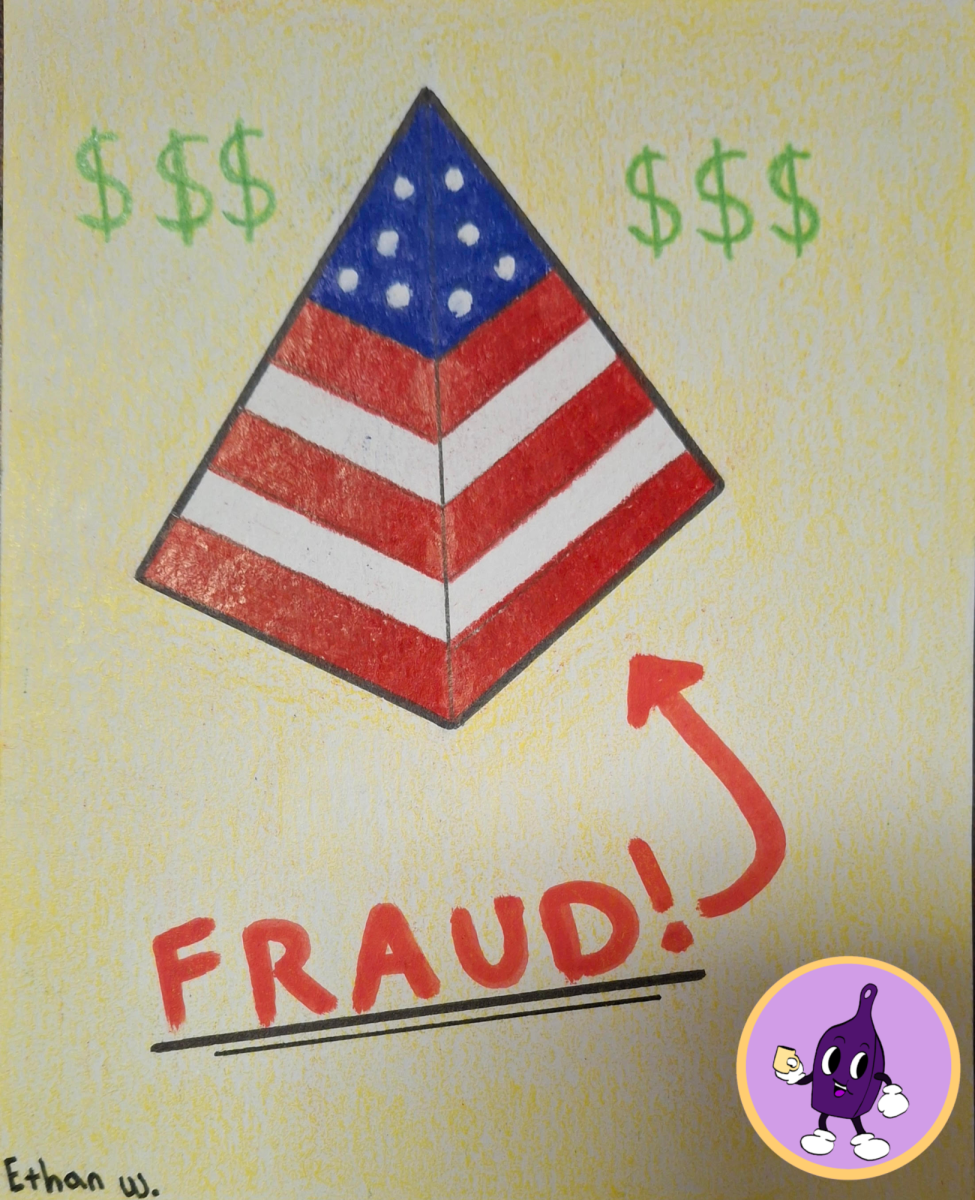
The United States has frequently implemented Trickle-Down Economics or the Supply-Slide Theory. This theory assumes that if those who are wealthy are able to maintain their wealth, they will stimulate the economy and generate jobs for the rest of the population. Pyramid schemes also rely on the people at the top to recruit or give jobs to those who were not previously involved in the scheme.
There are many different ways that a Trickle-Down Economics and pyramid schemes align in their attributes. The thing that makes this connection concerning is that those who gain from pyramid schemes are those who earn money from recruiting others to work for the company.
Heads of companies such as Jeff Bezos, the CEO of Amazon, earn much of their money from hundreds to thousands of workers who make far less than the one at the top of the pyramid.
Trickle-Down Economics began in the 1930s to describe President Hoover’s economic policies to deal with the Great Depression. Fifty years later, President Reagan campaigned on “Reaganomics” or supply-side economics, which were very similar to Trickle-down economics.
In Emily Lynn Paulson’s novel “Hey Hun”, she describes her own experience with a Multilevel Marketing (MLM) scheme that followed the pyramid schemes guidelines.
The three main attributes of a pyramid scheme are that they promise a high reward in a short period of time, there is no product or service sold, and the primary emphasis is put on recruiting new employees. This is very similar to the attributes of Trickle-Down Economics.
Both the economic theory and pyramid schemes target those who are in the most need of the things the company promises. MLM’s often focus on those looking for quick money who don’t have much time. Oftentimes, this means that they target single-parents or marginalized communities.
Trickle-Down Economics works in almost the same way. The wealthy are meant to create companies that will create jobs for those who don’t have them. However, when these jobs are created, they tend to under pay workers to the point where they are not able to make living wages despite working for hours everyday.
Since the 1970s, technology has been making more and more advancements, this leads to companies lowering the number of workers while maintaining production speed and quality.
The people who are able to afford these advancements are the same people who are meant to create job opportunities for civilians. Rather than doing that, however, they are actively taking away jobs from the people they are meant to help.
While unemployment rates do not typically have a steady rate of change, between 1970 and 2020, it has been steadily decreasing. During COVID-19 it dropped significantly, but it has been rising again for the past few years.
One of the most common reasons that people can’t find work is because the jobs that are available do not pay enough to be considered a livable wage. However, jobs that can pay enough for their workers to live have been seeing many job cuts without hiring new workers.
Along with job creation, according to the Trickle-Down Economics, those with money are meant to stimulate the economy by buying resources or services. The issue with this plan in the modern-day is that much of the money held by the wealthy in the United States is put into company shares.
The United States is currently presented to have some of the highest stock rates and lowest inflation rates in the country’s recorded history. However, due to the disproportionate amount that the wealthy spend, the data is not accurate to the lives of the majority of people in the United States.
The reason that the evidence does not align with reality is due to the country’s wage and income gap. The income gap in the United States has increased exponentially in the past 18 years.
The income gap itself reflects one of the common themes that are seen in MLM’s.
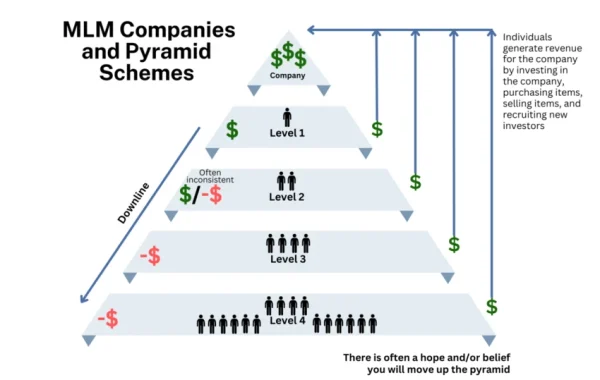
(Graph by the Research Gate organization)
The top of a pyramid scheme is a mirror image of the country’s 1% who gain money from those who they recruit. In turn those recruits gain money from their recruits, which they take a portion of and give to the one that recruited them. This causes whoever recruits the most people to gain the most money whether or not they are doing work to sell the product of their MLM. The person at the top will get paid so long as their recruits work.
Money makes money and that is the number one way that the wealthy continue to be wealthy. Jeff Bezos, the creator of Amazon, makes approximately $28.75 billion a year. However, 95% of this money comes from investments rather than the products he sells. These investments work in the same nature as recruits in MLMs.
One of the most notable features of a pyramid scheme is that they always fail eventually. This means that if the government carries on with an economic program that mirrors the pyramid theory, it will fail.