



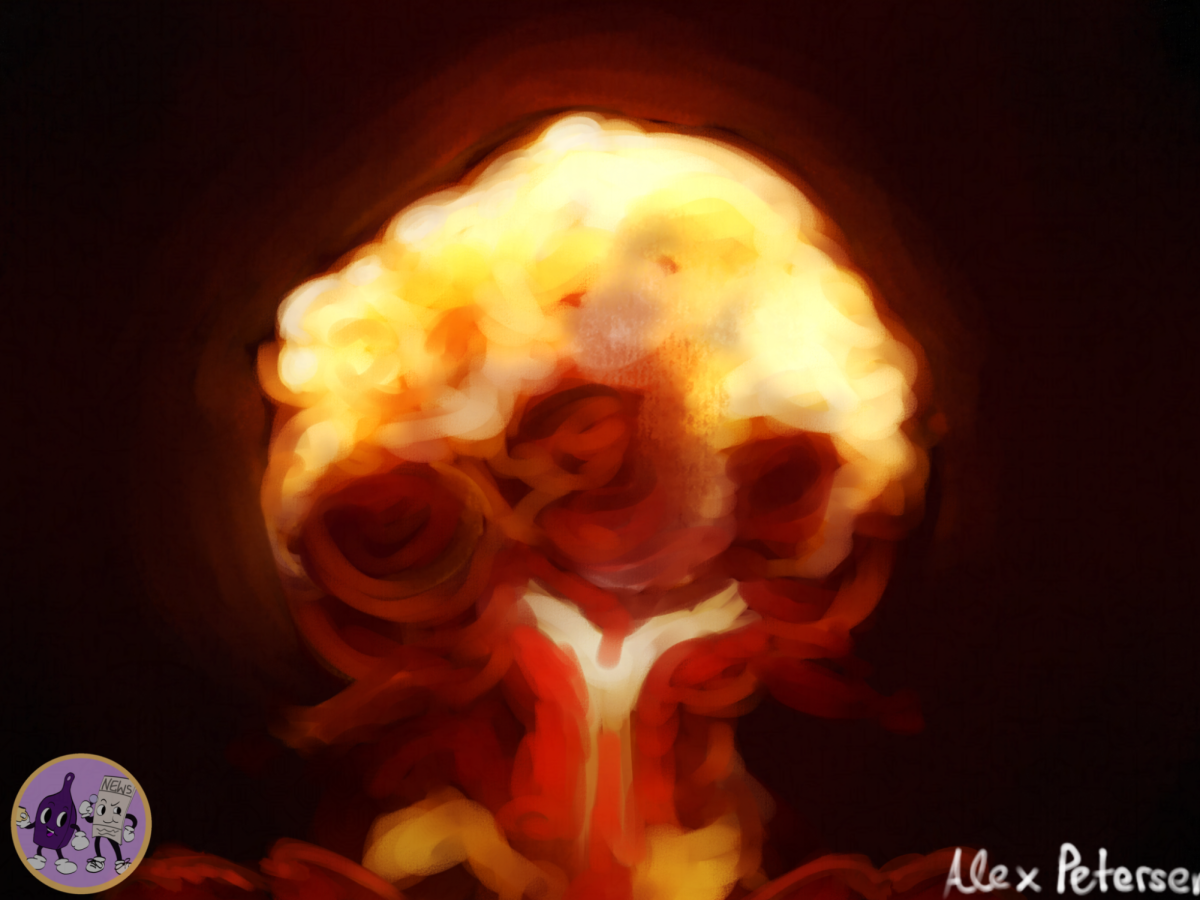
The treaty between the United States and Russia that limited nuclear weapons expired on February 5, 2025. Currently, both the U.S. and Russia no longer have arms control or limits on their nuclear weapons.
The Measures for the Further Reduction and Limitation of Strategic Offensive Arms Treaty (otherwise known as the New START treaty) focused on reducing the amount of nuclear arms between both the United States and Russia. It was signed on April 8, 2010, and after ratification, it entered into force on February 5, 2011.
The United States and the Russian Federations both met the limits of New START by February 5, 2018, and have stayed at or below them ever since, according to a 2023 report. These aggregate limits are:
- 700 deployed intercontinental ballistic missiles (ICBMs), deployed submarine-launched ballistic missiles (SLBMs), and deployed heavy bombers equipped for nuclear armaments
- 1,550 nuclear warheads on deployed ICBMs, deployed SLBMs, and deployed heavy bombers equipped for nuclear armaments (each heavy bomber is counted as one warhead toward this limit)
- 800 deployed and non-deployed ICBM launchers, SLBM launchers, and heavy bombers equipped for nuclear armaments
Another part of the agreement was that whenever one side wanted to use their warheads, they would have to let the other side know ahead of time. Along with that, both sides were allowed to investigate each other’s nuclear plants to search for any new nuclear bombs or anything similar to that being made in case the other side was made unaware.
However, during COVID-19, the United States and Russia mutually agreed to halt on-site inspections and Bilateral Consultative Commission (BCC) meetings. In the second half of COVID-19, the U.S. sought to restart New START in its entirety, whereas Russia rebuffed those efforts.
In February, 2023, Putin announced that the county would suspend New START, citing the United States support for Ukraine as justification.
While Russia continued to the treaty’s central limits, it stopped fulfilling New START’s verification requirements and participating in the BCC. Meanwhile, the United States had found Russia to be non-compliant with New START since 2022 due to its refusal to allow inspections, meet in the BCC, and provide the response to Moscow’s violations.
In response to Russia pulling away, the U.S. implemented countermeasures and began withholding U.S. treaty data and denying Russia the ability to conduct on-site inspections on U.S. nuclear bases.
In September, 2025, Putin proposed a voluntary, one-year extension of New START’s central limits. When it was proposed, President Trump claimed that it “sounds like a good idea”. President Trump had also suggested around that time that if New START expires, a ‘better’ agreement could be negotiated and said that China could be included.
The strategic environment is further complicated by U.S. plans to further accelerate advanced missile defense capabilities under the ‘Golden Dome’. Moscow has linked offensive nuclear limits to constraints on U.S. missile defense. An accelerated push by the U.S. to enhance its missile defenses, combined with the disappearance of New START’s constraints, risks reinforcing Russian (and potentially Chinese) incentives to expand and diversify their offensive arsenals, fueling arms race dynamics.
Negotiating a new treaty from scratch would be a major undertaking even in a more stable political environment. It requires technical work on definitions, counting rules, and verification, along with sustained diplomatic engagement and a degree of trust. The idea that a comprehensive successor could be concluded quickly is unrealistic.
China has not been an official party of New START and has never been a part of these agreements to limit strategic nuclear arms. The U.S. Department of Defense estimates China’s nuclear warhead stockpile to be in the low 600s, which has nearly tripled in size since 2020, not including projects that China is on track to reach a stockpile of 1,000 nuclear warheads by 2030, which is why the US plans to push hard for an agreement.
In 2020, the first Trump administration sought to engage China in arms control talks. By late 2023, the Biden administration held talks with China on nuclear risk reduction and nonproliferation issues, but no subsequent discussions took place.
President Trump claims that he believes there is a new opportunity for discussion of a treaty and wants a successor agreement of New START to include China. He told The New York Times on January 8, 2026, that, “I actually feel strongly that if we’re going to do it, I think China should be a member of the extension. China should be a part of the agreement.”
President Trump concluded that he has spoken to President Xi about it, and he thinks that “he’d be a willing participant”.
In principle, a broader participation in arms control would be desirable. However, Beijing has consistently argued that it will not join formal arms control negotiations while its arsenal remains far smaller than those of both the United States and Russia.
At the end of the day, Russia is likely to blame the United States for this situation, pointing out that it was willing to observe a one-year freeze on these numbers while negotiating a more comprehensive agreement and the U.S. refused.
The United States will point blame at China due to their rapid buildup of nuclear warheads while refusing to join nuclear arms control negotiations.
China is likely to blame both Russia and the United States, noting their far larger stockpiles and urging them to adopt a ‘No First Use’ pledge.