



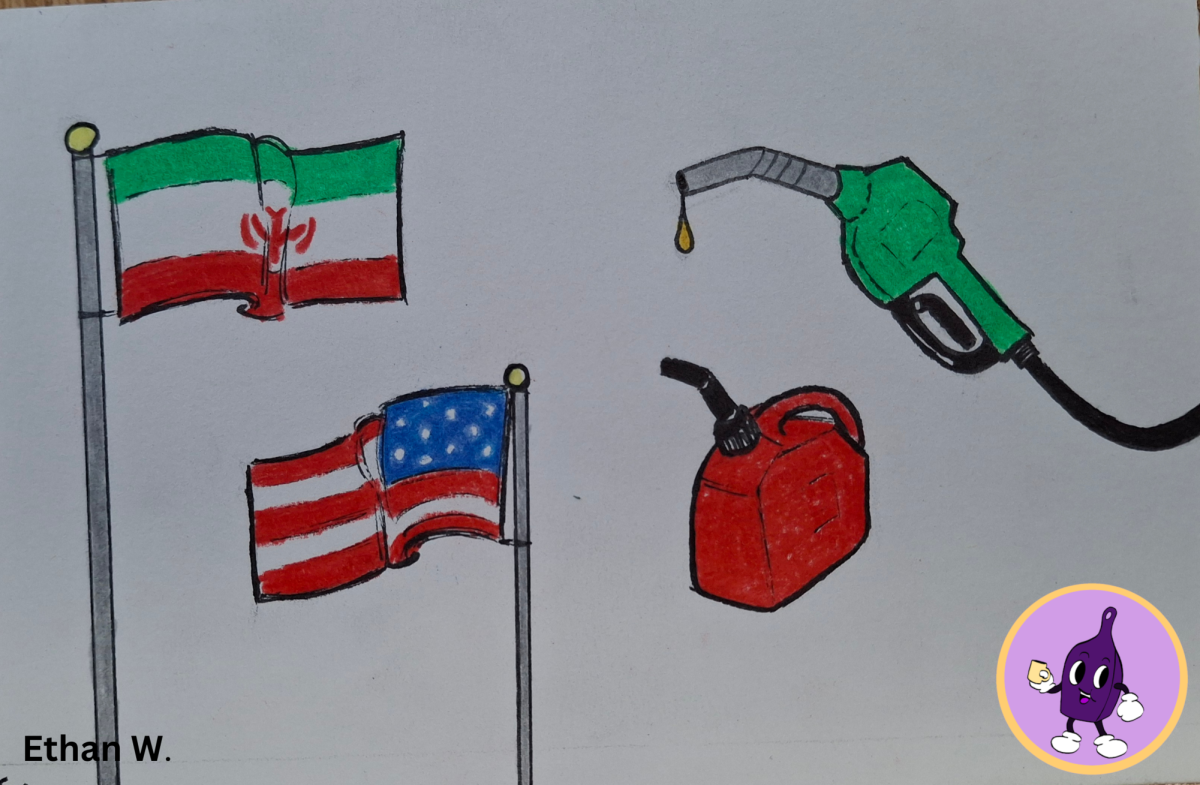
On February 28, 2026, the United States and Israel launched coordinated large-scale military strikes targeting Iranian missile sites, military infrastructure, and leadership. This conflict was initiated with hundreds of strikes in the first twelve hours.
The operation was aimed at Iranian leadership and military capacity. At the end of the first attack, Supreme Leader Ali Khamenei was reported as deceased, along with his wife. On March 9, 2026, Ayatollah Ali Khamenei’s son, Mojtaba Khamenei, was announced to be the next Supreme Leader.
“He’s [Mojtaba Khamenei] going to have to get approval from us,” President Trump claimed. “We want to make sure that we don’t have to go back every 10 years, when you don’t have a president like me that’s not going to do it.”
The strikes followed heightened tensions between the United States, Iraq, and Iran, including Iranian provocations in the Strait of Hormuz in early February 2026. In response to the strikes, Iran launched missile and drone strikes against U.S. and Israeli interests throughout the region, including oil infrastructure.
There are a multitude of reasons for why the U.S. and Israel launched “pre-emptive” strikes on Iran. One was to neutralize alleged imminent threats, specifically targeting nuclear facilities, ballistic missile capabilities, and military infrastructure. The actions are aimed to prevent a nuclear-armed Iran, protect American allied forces, and encourage internal regime change. Based on reports from early 2026, key reasons for the U.S. attack on Iran include:
- Preventing Nuclear / Military Capability. The primary justification was to eliminate Iran’s ability to develop nuclear weapons and destroy its ballistic missile capabilities.
- “Pre-emptive” Defense. U.S. Officials claimed that the strikes were necessary to stop imminent attacks on U.S. forces, bases, and other allies in the region.
- Regime Change Objective. President Trump has indicated a desire for the people of Iran to “take back” their country, suggesting a goal of undermining their current and new leadership.
- Rising Tensions and Failed Diplomacy. The actions that have been following years of heightened tensions, the collapse of negotiations, and Iran’s increased enrichment activities.
- Support for Protests. The U.S. aimed to support Iranian protesters following a violent crackdown on demonstrations.
Primarily, Iran’s economy is driven by oil and natural gasses (conventional gas, shale gas, liquefied gas, etc.), which provides essential revenue for the government despite representing a smaller portion of the total gross domestic product (GDP) than services.
Petroleum makes up roughly 80% of their total exports as an energy superpower due to it having significant reserves. The economy is heavily state-controlled, with a large, diverse service sector (around 55% of GDP) and substantial industrial manufacturing, which includes automobiles and petrochemicals. Some other key economic sectors include:
- Oil and Gas: Iran holds the world’s second-largest natural gas reserves and third-largest oil reserves despite sanctions and underinvestment. Some key exports include crude oil, petroleum gas, and petrochemical products.
- Services Sector: This sector is held accountable for roughly half of the economic output and employment of Iran, including banking, insurance, and healthcare.
- Industry and Manufacturing: Manufacturing, construction, and mining contribute approximately one-third of the GDP, with major activities including metal fabrication, food processing, and car manufacturing.
- Agricultural: Approximately 10% of the GDP goes to agriculture. It is still a significant employer and includes products like fruits and nuts.
- Key Partners: In 2024, some of their top export destinations included China, Turkey, Pakistan, and India. Their significant imports of foodstuffs included: corn, rice, and soybeans.
Iran’s economy is in a severe, deepening recession characterized by accelerating inflation (above 40% in late 2025), a collapsing currency, and worsening shortages of essential goods and services. Years of international sanctions (along with internal corruption mismanagement, and recent infrastructure damage from the conflict) have restricted oil exports and caused acute financial distress for citizens.
Nationwide protests were largely initiated by a collapse of the rial (official Iranian currency) in late December 2025, which had reached record lows against the U.S. dollar. This caused prices to dramatically increase for essentials like food and fuel.
The protests intensified in early 2026, driven by a severe economic crisis, which included a 95% drop in the rial’s value since 2018, 40% inflation, and high unemployment. Demonstrations began in Tehran’s bazaar after currency collapse and, despite harsh suppression, have evolved from economic grievances into demands for the regime to make changes.
As of March 11, the Strait of Hormuz had been critically shut down following the outbreak of conflict between the U.S., Israel, and Iran. Traffic in the strait has ceased, especially with the reported attacks on a multitude of cargo ships and tankers in the region.
Approximately 90% of Iran’s crude oil is exported from Kharg Island, which is a primary terminal located in the northern Persian Gulf. The oil is then transported through the Strait of Hormuz.
The day before the Strait of Hormuz had been officially shut down, crude oil prices had reached over $100 per barrel, driven by supply fears and geopolitical tensions. Both Brent crude and U.S. benchmark oil have also passed $100 following attacks on shipping in the Middle East.
Global stock markets have been reacting to the volatility, with oil prices continuing to fluctuate across. Recently, crude oil prices have dropped over 11%. The decline is mostly given credit to President Trump’s prediction of a quick end to the conflict with Iran. However, while crude oil has dipped, consumer gasoline prices have continued to rise.
Across the United States, citizens can see the effect of the gas prices affecting their personal lives. In Missoula, Montana, a city known for people traveling more often than not, more money is being pulled out of their pockets in order to fill their cars.
The current average for regular gas is $3.230, whereas a month ago it was $2.763. The current average for diesel is $4.080 – a month ago it was $3.219. As of March 17, 2026, the Montana average for gas has increased $3.442 in total, and is going to continue to rise as Spring Break is around the corner for students of all ages.
While comparing gas prices, the national average has remained mostly higher than the Montana average. A year ago, Montana had reached a higher price range by $0.036, and Montana residents still worry about how the closure of the Strait of Hormuz will have an effect on the current gas prices in the months to come.
It is important to recognize that global warfare still has an effect on the citizens of the United States, even if Congress has yet to officially declare war. Due to Iran’s involvement in the oil market, the globe will be facing increased gas and oil prices for a while.