



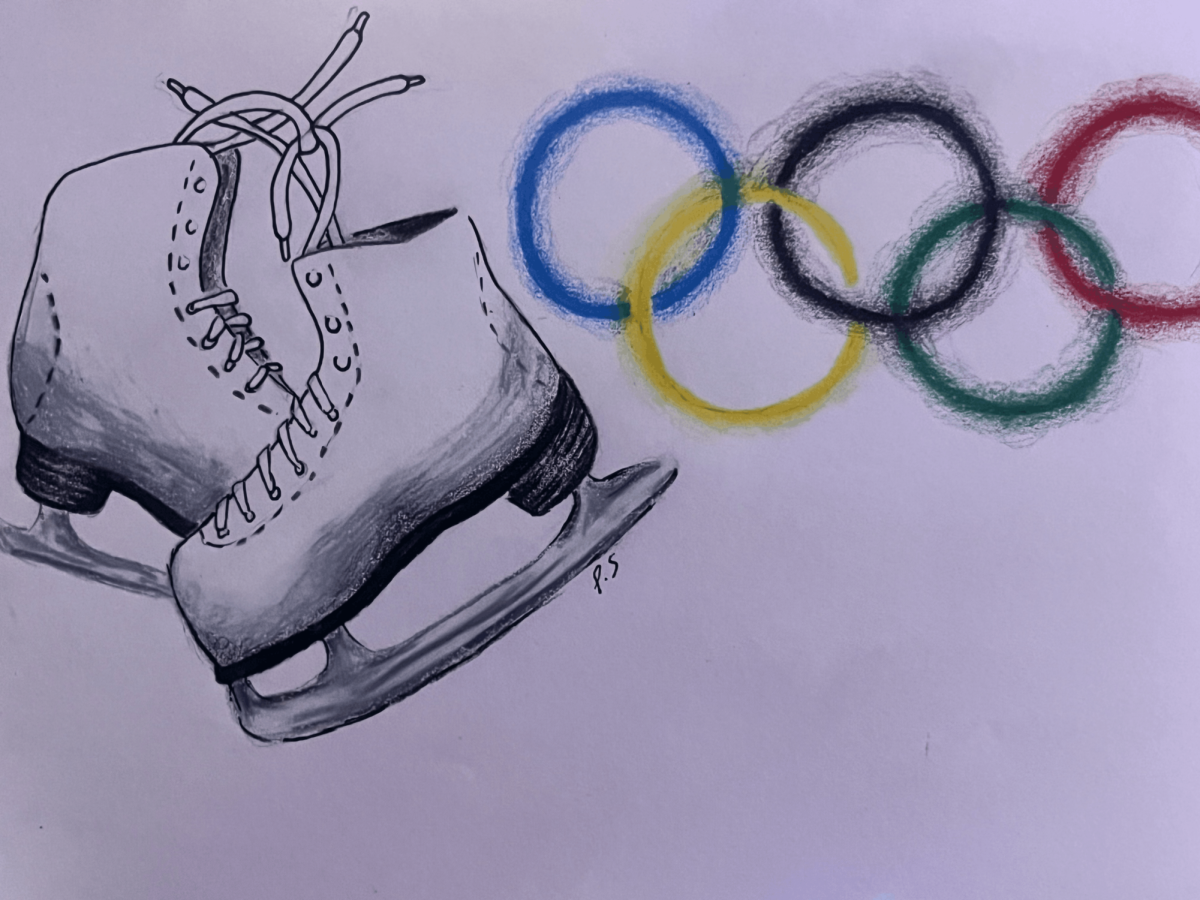
Olympic athletes face immense pressure to win and to be perfect. However, Alysa Liu finds a way to release the pressure of skating and focus on having fun. When she skates, she is 100% herself and skates how she chooses to. Liu not caring about getting gold relieves her of the pressure that many other athletes face, but how does she do it?
Alysa started skating at five years old when her father put her on the ice. At 13, she was beating adults in international competitions. At 16, she was in the 2022 Winter Olympics. Several months later, she quit the sport claiming that she hated it and it had consumed her life. Only 18 months later, she pulled her skates out of the closet to skate for fun with friends, and she landed a triple jump as if she had never stopped skating.At only 20 years old, Liu found herself an Olympic champion in the 2026 Winter Olympics. She delivered an outstanding performance, landing all seven of her triple jumps and receiving 226.79 points overall. Liu became the first American woman to win gold in individual figure skating since Sarah Hudhes in 2002.
She competed at the 2022 Olympics and won bronze at that year’s Worlds before abruptly retiring that late spring due to fatigue and burnout. “I didn’t want to skate anymore,” she admitted. “I didn’t have any goals, and I felt like I was training for nothing and competing for no reason, I didn’t like it”. When Liu stepped away from the rink, it allowed her to have a life that didn’t revolve around being on the ice everyday. Her family had mixed feelings about her leaving the sport.
While her siblings were glad because she could spend more time with them, her dad was saddened by her decision. All of Liu’s life, he had spent time with her skating and driving her to and from the rink. When she stepped out of her “bubble” of figure skating, she realized she enjoyed other sports like volleyball and tennis. When she did come back into skating, she didn’t want it to consume her life, “I don’t fit my life into skating, I fit skating into my life”, Liu said. She had stayed away for four years before returning to training in California with the goal of rediscovering the joy of skating and having it be on her terms.
Liu wanted control over how she skated, what music she skated to, and even what she ate. Liu wanted skating to be something she loved again, and to do that she had to skate her way. Not the way of her coaches. Her coach agreed to her terms and she started to skate again, better than she ever had before due to this newfound peace and released pressure.“Alysa is different,” said her coach Philip DiGuglielmo, “We know that she wasn’t here to skate and to get a medal, she was here to skate and enjoy it”.Liu was overjoyed to win her free skate. Her performance had gone just as she hoped in her free skate saying that she was “very grateful I got to showcase my art and ideas.”
Another Olympic skater, Kaori Sakamoto made one error, a wonky landing on her triple flip that had stopped her from adding a triple toe loop onto it. The mistake in this jump was the difference between silver and gold. Ami Nakai, who had won bronze in the Olympic freeskate had made several mistakes and ended up with bronze in the end. Liu made almost no mistakes in her free skate and won gold, with 2.53 points over Sakamato’s score and 9.75 points over Nakai’s score.
Liu wasn’t focused on hearing the scores and what they showed about her. “These titles are huge, but I don’t want them to overshadow who I am and what I do and what I’m all about,” Liu said. “Winning isn’t all that and neither is losing.”
Since Liu has come back on the ice, she thinks it important that parents listen to their kids when they need to take a break. “For me, my balance is my social life, skating, and school. I think it’s crucial because we are humans before being athletes,” she said. “I’m taking it day by day because it’s a conscious decision for me to come to the rink and skate. I have no attachments to anything so I kind of live and go with it.”