


Although the quality of meals provided by public high schools has improved within the last twenty years due to stricter regulations, the perception of the quality of American school food has not changed.
STUDENT OPINION
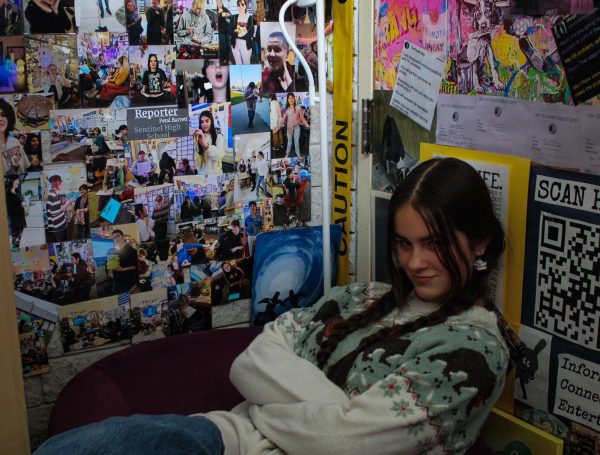
Junior Sentinel High School students Annika Gillette and Ameera Moua were questioned as to whether or not they enjoyed eating the provided school lunches. Both claimed they enjoy the food “sometimes”. The primary reason for their uncertainty was due to them feeling that the quality of the food was often less than satisfactory.
Gillette claimed that occasionally the food “didn’t make my body feel good [to eat]”. She attributed this feeling to the food likely being highly processed, of poor quality and questioned whether or not it was “cooked all the way”.
Gillette also considered the price of the meal ($3.25) to be too high considering the quality of the food provided.
Moua held a similar opinion stating that while she found the food filling, she felt that, “it wasn’t the most nutritious” and was easy to identify as processed. One of her other grievances was that she occasionally found something “hard” in a bite of her burger or sandwich. She labeled this experience as “nasty”, but shrugged it off saying that “that’s how school food is, you know?”
Both Gillette and Moua agree that if the ingredients within the food could be of higher quality it would not only taste and look better, but it would also be more well-deserving of its price tag as they would be paying for the improved quality.
Having heard this opinion numerous times throughout his career, Head MCPS Food Supervisor Edward Christensen offered an in-depth look at what is in school lunches and the improvements that have been made behind the scenes.
PROGRESS AND QUALITY OF FOOD
Christensen’s office is located within the MCPS central kitchen. This is the kitchen that supplies not only all three high schools, but also the elementary and middle schools with a total of 6,000 meals a day on average.
Despite the way American school food is viewed, Christensen states that they have made major progress in bettering the quality of meals offered. He states that although the food is “designed for school” and is “not ideal”, there are many things they are “really proud of” as well.
“Over 80% of everything we do has a grain or a whole grain product”. This includes items offered on the daily menu as well as special items. Christensen also emphasizes how school products are often sourced from the same places as common retail items. An example of this is found in the pizza offered by the school. Christensen states that the pizza is “the same pizza you would find at retail with just a few differences”. These differences include a whole grain crust and real mozzarella cheese.
All items are made with this same quality because it is “…real food. Our chicken is real chicken. Our beef patties are real beef”. The beef asada is “real beef, real cheese, and a whole grain crust. The corndog we use is by Foster Farms. It [features] reduced sodium, reduced fat, and a whole grain breading”.
Christensen also states that the MCPS Departments buy locally as often as possible. “The marinara we use is actually a Montana sourced product. Most of our chicken are top end Tyson products”. This high quality food is not easy to procure and has been a part of a long-term improvement process.
Christensen states that before buying a product, the department asks themselves, “What is the best product we can put on the menu”? This effort goes largely unrecognized, however, because this research “is done behind the scenes”, so students don’t know about it.
REGULATIONS
The truth of the matter is that “the food isn’t garbage because we can’t sell garbage”. Christensen states that it would be near impossible to sell “bad” or “gross” food to schools because they “live within a lot of regulations set within the USDA”.
One of these regulations is The Healthy Hunger Free Kids Act which was instated in 2010. This program instated many regulations, one of which required all foods to be made with whole grains. It also outlined exactly what foods are allowed to be sold to and in schools. In order to sell something Christensen states that he “[has] to run everything [they] do through the Smartsnack Calculator to determine if [they] can sell it”. He also states that the Office of Public Instruction evaluates the program by going through menu records and numerous other documents every five years in order to keep them up to code.
This leaves Christensen and his colleagues with many “things [they] want to do that [they] can’t do because [they’re] not allowed to”.
BUDGET
Christensen acknowledges that a part of the reason school food is so distrusted is because there is nothing informing students as to their school food quality. Despite the program being nationally recognized, the budget it offers is “stretched so thin there is nothing left over for marketing”.
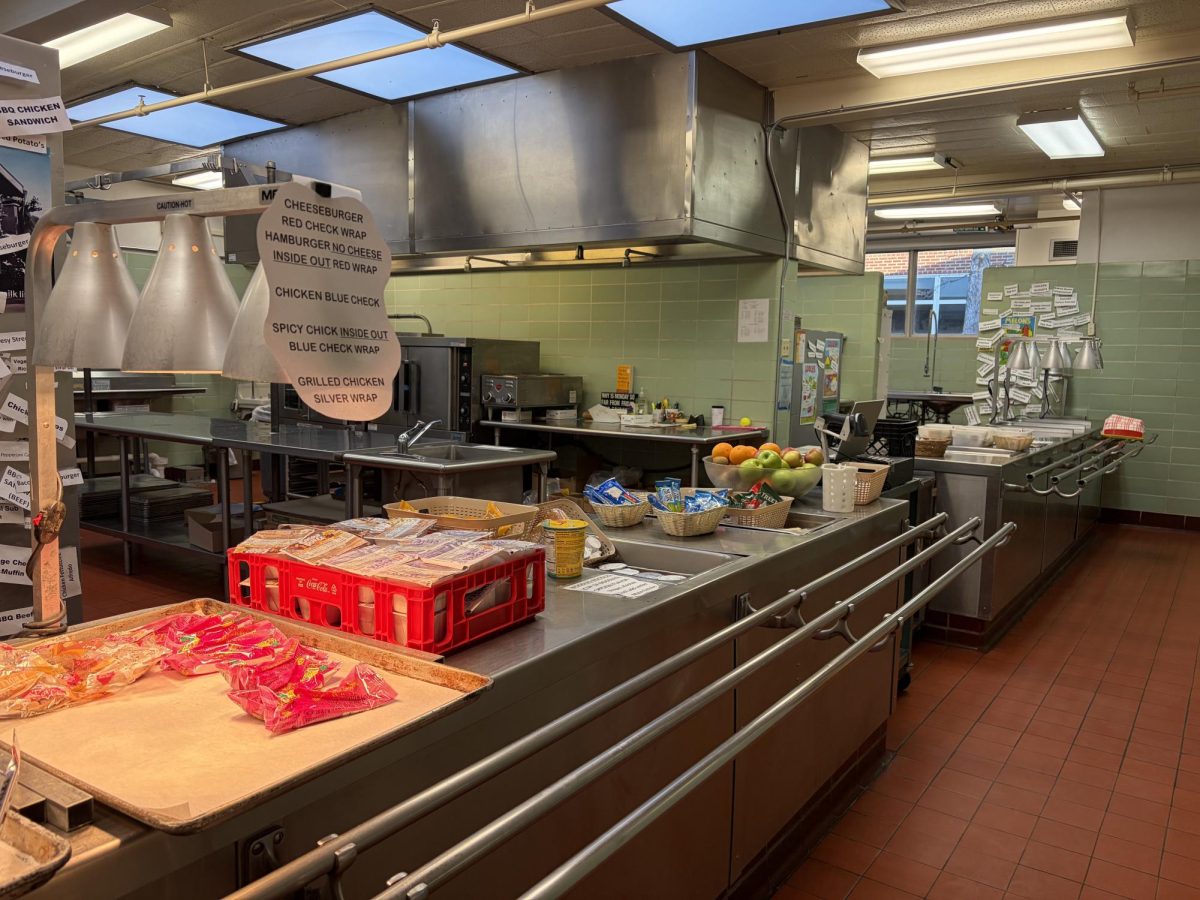
The program is set with prices and reimbursed federally, but this only applies to the food. Any equipment must be bought through the school, and although Sentinel has received updates such as repainted doorways and pillars within the last year alone, Christensen states that of the money put towards the school “not one penny of it went into the kitchen area”. This makes it easy for students to assume the worst due to the outdated look of the kitchen.
Besides federal funding, the MCPS Food Supervision Department also receives funding from a commodity program.
The commodity money used by MCPS is offered through the same program that aids colleges and hospitals. This money is provided depending on the amount of participation in the National School Lunch Program – so how many meals are sold – and is provided by the USDA. This money is put aside and accumulated until it can be accessed at the end of the year. Christensen states that with this money MCPS buys “fresh fruit and vegetables, chicken and pork to make the products, garbanzo beans, flour, oil” and other kitchen staples.
Christensen states that the cost of each meal is best kept under two dollars for them to buy, and sold to students at a 50% profit margin. It is vital to Christensen that prices stay this low because he understands how many kids rely on the reduced price of school lunches, stating “Where else could you go with four dollars and get a full meal? I don’t know that you could”.
Christensen’s main motivation is providing kids with “nutritious meals” at a reasonable price, even saying that in an idealized world lunch would be free for every student. He claims that when he first arrived in his position “22 years ago… the concept of ‘gross’ was probably very true, [but] we’ve grown a lot”.
Christensen has spent so much time trying to bring in more vegetable products because when he was a kid, there “wasn’t another option”. The food was of poor quality and everyone knew it. In 2026, it is now a matter of making kids understand that there’s “a difference between the accepted truth and the actual truth” when it comes to the quality of their lunch.