




According to trusted figures in the Sentinel High School community, such as Assistant Principal Dana Young, the rates of chronic absenteeism have slowly continued to rise since 2021. Math teacher Brian Moser adds that with “how often there are open desks” in his classroom, it’s clear that absence rates are getting “worse and worse”.
While it’s unclear what’s causing this influx of student absenteeism, Sentinel (by setting up stricter policies and clearing up misconceptions from both students and teachers) aims to curb “skip culture”.
STUDENT PERSPECTIVE

For many students at Sentinel, skipping is a normal part of high school life (or at the most, an extension of freedom). As senior Troy Rodriguez describes it, a “medium” for the liberty” in his life. If a student finds themselves preoccupied during lunch they, like senior Aidan Frye, might use their fifth period as a time to recuperate. Likewise, Senior Jocelyn Cheney finds it helpful to skip a class and use that time as “a little break” to “regain [themselves], [their] composure” and prepare to “just go back”.
One of the most common places for students to go while skipping is their vehicles. Senior Logan Bloom enjoys skipping in his car, as it tends to be “more peaceful than a classroom”. Inside a vehicle, students have almost complete control over their environment. If they’re cold, they simply turn up the temperature. If they want to play music, there’s no one to stop them.
However, skipping for students is not just about freedom, control, or comfort. A major catalyst for skipping, as Bloom describes, is simply “priorities”. In his case, prioritization means that in classes like study hall, in which he’d “just be sitting on [his] computer watching YouTube,” he’d rather go home and enjoy a meal.
For Rodriguez, prioritization takes shape in the way he treats the classes he labels as expendable vs. the classes he views as indispensable. For “fun classes”, Rodriguez is willing to skip out if he simply “[thinks] of something else that would be more fun”. But for core classes like U.S. Government and English, Rodriguez actively avoids being absent.
Prioritization continues to guide students like Frye, as he realized that every subsequent absence would lead to “less of a reason” to skip again. To avoid becoming trapped in this “snowball”-esque cycle, Frye limits his skipping to either get food or complete a big assignment.
TEACHER PERSPECTIVE
For a student, skipping may seem relatively harmless, given that it typically requires half an hour to catch up. For teachers, however, skipping is detrimental. As English teacher Annie Schick believes, skipping class hinders students the most. In addition, Math teacher Katie Moser notes that “there are scenarios where you need a day, but overall, I think that [skipping] compounds the problem”.
For teachers like Joe Fischer in the Social Studies department, it becomes apparent that the more students attend classes, the better grades they tend to earn. Likewise, English and Theater teacher Katie Cassidy continues this sentiment by bringing up the fact that yes, students “can go home, read that chapter … and still absorb that information,” but they miss out on the “dynamic” learning that comes from classmates “asking questions” and then “listening to [their] answers”.
In classes heavily reliant on muscle memory like wood shop, welding, and all the variations of PE, teachers can’t quite help students if they’re gone. As Health teacher Tyler Bowen simply put it, “I can’t teach you to do something if you’re not [here]”.
While in more typical classes, the setbacks of an absence may not be as obvious, but they are still just as impactful. For classes like math, psychology, and U.S. Government, online resources can only help to a degree, given that, as Mr. Moser put it, “There’s only so much that we can post”. This, as Schick believes, is why students tend to be lost when they come back. She explains that when a student misses class, “they not only miss the content, but they lose a little bit of the connection and community they could’ve had”.
On a larger scale, skip culture can be problematic as it accustoms students to the expectation that they can be absent whenever they want. However, as Social Studies teacher Heath Nordiquist brings up, “the real world is knocking”. Nordiquist hopes that by turning down skip culture and showing up to class, students condition themselves not only to be consistent but also to be comfortable in discomfort: to wake up and do things they don’t want to do.
Teachers such as Cassidy worry about students and their future as “informed citizens” if they can’t learn these lessons of workplace discipline. As Mrs. Moser continues this thought, when students get a job, “they can’t just not show up to work every other day because [they’re] tired, or because [they] stayed up playing video games, or whatever it might be”. Even in college, chronic absenteeism hurts students, robbing them of scholarships, grants, and additional opportunities provided by the school (such as studying abroad).
ADMINISTRATIVE PERSPECTIVE
Administration and office workers are amongst the main Sentinel staff members that handle student attendance. Administration publishes the attendance and absence responsibilities for all parents and students in the student handbook. The handbook is given out to all students on their first day of freshman year and is on the district’s website.
Students are required to attend all classes and other instructional activities on time every day that school is in session. They are expected to be aware of and follow the correct procedures when absent from an assigned class or other instructional activity, and request any missed assignments due to an absence in a timely manner.
Parents are required to ensure the student is attending school, inform the school in the event of a student absence, be aware of and follow the correct procedures for reporting student absence, and work cooperatively with the school and the student to resolve any attendance issues that may arise.
There can be many reasons for a student to need or want to miss school. One of these reasons is for a school field trip or if they are traveling for a club activity. Sentinel High School Principal Stephanie Thennis has been pushing for many years to get students involved in school beyond just their scheduled classes.
Many coaches for clubs and sports at Sentinel require their students to fill out a pre-arranged absence form, found in the office, when they are going to miss school. When coaches do their part and students do theirs it creates a sense of ease in the administration. Thennis emphasizes that students missing school for clubs and activities is an absolute non-issue. The administration wants students to be involved in their school community.
Students may also be gone for family reasons, such as travel or vacation. When this happens, Thennis says that parents usually call in preparation for the planned absence. This changes when calling about a sickness. Calling out for a sickness usually happens the day of the absence or when the parent receives the automated call at night and realizes they forgot to excuse their sick student.
When a student reaches ten absences in a semester they are considered by the school to be “chronically absent”. At the point of a student’s status reaching chronic, administrators intervene with the student and their team. A student’s team is made up of their parents, counselors, and their teachers. In extreme cases of chronic absenteeism, a student may be referred to Child and Family Services or the Missoula County Attorney as is required by Section 20-5-106 of The Montana Code Annotated. Students aren’t automatically put into the “chronically absent” category when absent multiple days in a row.
Once students reach six absences in a semester they are considered “at risk” for chronic absenteeism. At this point a student is referred to The Sentinel Attendance Intervention Committee. This committee has teachers and administration alike on it and determines if an intervention is needed. An automatic referral is sent to this committee when a student has too many unexcused or an excessive amount of excused absences. Parents can only call their students so many times before further documentation or explanation is needed. For example, if a student is absent because of a sickness multiple days in a row, the attendance office might request a note from a medical professional.
The safety of students is the administrators number one priority and is a primary reason why all of these precautions are being implemented for students. When students miss school without information the school fears for their safety and is potentially liable for what happens while students are unaccounted for.
In extreme situations, credit for a class may be put on hold until a plan to earn back credit and make up the work from the missed school days is enacted with a student’s teacher and the rest of the student’s team.
Students being tardy is also a major issue for the administration team and there are many issues with tardiness at Sentinel. At Sentinel, three tardies is equal to one absence and a lunch detention. A student is marked tardy if they attend a class within the first ten minutes after the start bell has rung and after those ten minutes they are marked absent. In the first ten minutes of class, teachers usually give instructions for the class period.
Teachers are supposed to send an email to administrators if they get concerned about an attendance record and it doesn’t meet the criteria. Overall, the intent for the tracking of students is for students to be safe and well rounded learners. Attendance interventions can happen at any time if someone on a student’s team deems it necessary.
At Sentinel, nobody is allowed to leave class for the first fifteen minutes, although this is rarely enforced. A couple of years ago, Sentinel administration requested that the Coffee Cart not make drinks for students within the first ten minutes of class so that students would not be tardy with the excuse of a long coffee line. Recently, the administration has forced the closure of the student-run convenience store, The SpartaMart.
Senior Alyssa Haninen ran the SpartaMart during second period until the closure. She was able to fit this into her schedule because she had a work based learning period on her schedule with Mrs. Blouin, the BPA advisor. She says that the work based learning periods which about seven people have at Sentinel teach real world skills. When Alyssa applies for jobs, she puts the SpartaMart and the skills she has learned from it on her resume. During zero period, Annabell Brock, the SpartaMart Manager, balances the till, completes an inventory check, creates the schedule for the upcoming weeks, and much more.
Many who do the work based learning periods feel that the attendance issue at Sentinel is not caused by The Spartamart and the students that are skipping to go to the store will continue to skip just in a much less safe area. Often when students skip class, they leave campus to hang out with friends, get food, or a combination of the two.
ADMINISTRATIVE CONTROL
Sentinel administrators create a new schedule every year in order to try to prevent students from skipping class. They set up meetings with other administrators across the district of Missoula County Public School and at Sentinel High School in order to create a system that they believe would work best in order to keep the students safe and inside the school for the whole school day.
This is because it is any school’s responsibility to take care of the students while school is in session, explained Sentinel attendance clerk Melissa Olsen. If a student were to suddenly go missing or have an emergency, the school could be held accountable for not ensuring the student’s safety.
It is also important to recognize that the funding of multiple schools of various ages and grades relies on the amount of students and the attendance of the students. This is why schools with less students receive a minimal amount of money, causing them to obtain fewer items to further the education of the students attending the school.
Multiple U.S. public schools are based on attendance for budgets. More specifically, the average daily attendance (ADA), which is the amount of total student attendance days divided by the total number of instructional days during a certain period. This impacts not only the amount of resources the school receives, but it also impacts the budgets for programs and staff. Along with this, there is no solid system across all states, which has caused problems to occur for students who transfer.
An example of this is shown through the disadvantages of transfer students from lower-income backgrounds that hinders seamless transitions and creates academic and financial barriers to completing degrees. Transfer students who are going from a well-funded school to a low-income area well face larger classes, more outdated materials, and fewer support services.
Sentinel High School Principal Thennis also brought up two main factors as to why creating schedules and student attendance is important: “[First,] the graduation requirements adopted by the MCPS Board of Trustees. [Secondly,] elective courses driven by student interest, gathered through the registration process. From there, students select classes that help them meet graduation requirements while also exploring their individual interests and goals.”
TEACHER CONCERNS
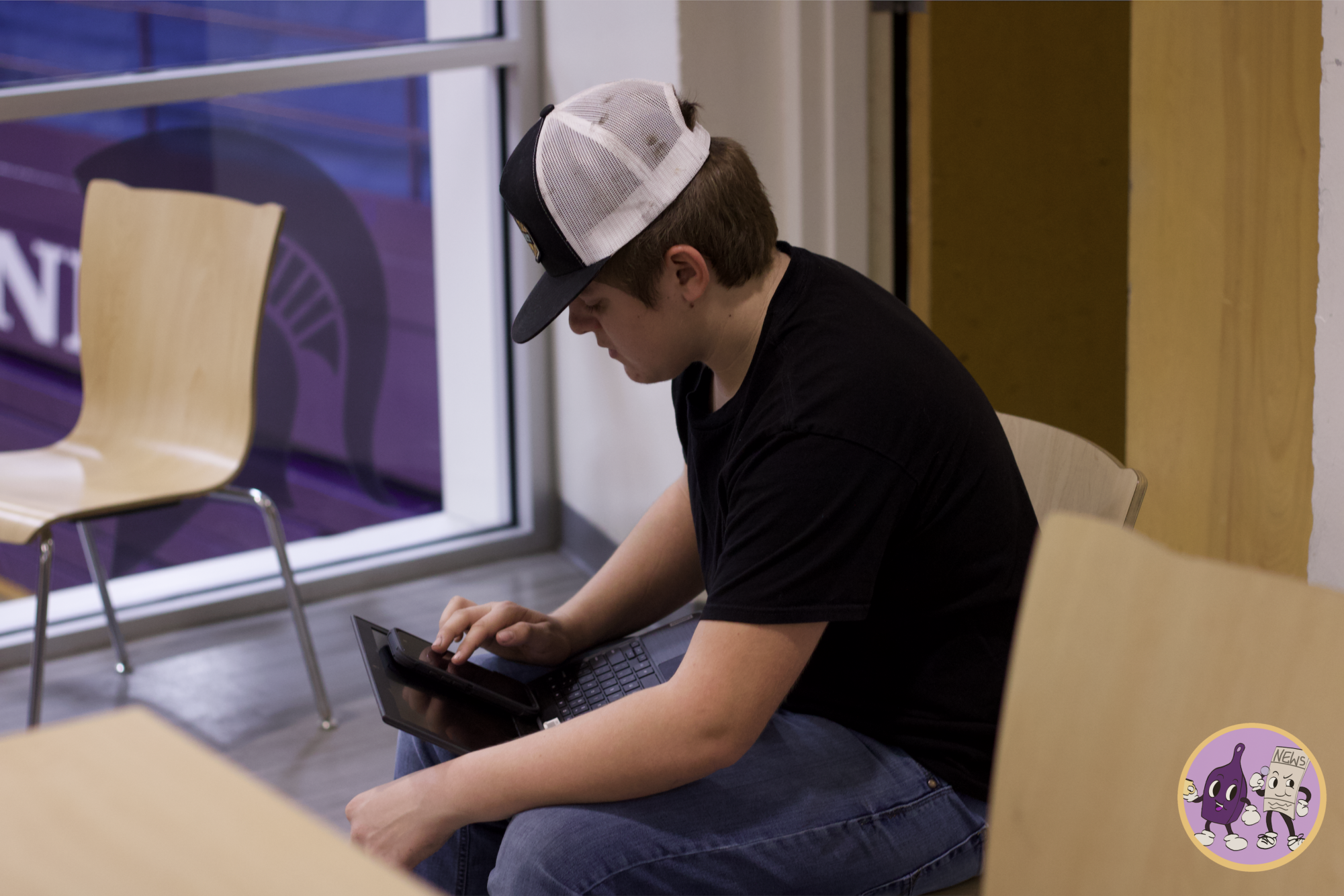
Teachers, on the other hand, are trying to look out for the students. During interviews, multiple teachers raised concerns about students who are constantly absent and how that can harm their future opportunities, even if it is more relaxing to work somewhere more quiet or a student cannot feel like they can work in a stressful environment. Cassidy emphasizes this point: “There’s just a dynamic about learning with other people and asking questions and listening to answers. Having a conversation, a discussion, or an argument over certain things that just leads to deeper understanding and learning”.
Sentinel administration was unable to provide statistics about the amount students present per day. Teachers, on the other hand, were able to provide a rough estimate of how many students are in their class on average.
According to data collected as part of the interview process, an estimated 75% of students are present during the class period. Many of the teachers raised concerns about students that they are worried about are constantly absent and are falling behind in their class, and they fear others as well.
With teachers trying to provide support for their students, it’s easy to feel frustrated when they feel as though the school administration isn’t doing the same. Avery Sindelar, a math teacher at Sentinel, brought up the “10-day policy” from his high school days, meaning that “if you have ten absences then you did not get credit for a class.”
However, this seemingly strict policy only counted for unexcused absences. Ultimately, if a parent excused their student for medical purposes or or school sponsored event, the missed day didn’t count against them.
Sindelar went on to explain that the administration “does have some issues with handing out detentions,” and that they are “related more to tardies than to absences.”
Teachers are trying to help students succeed through high school, but when the students aren’t giving themselves or the teachers the opportunity to, then the teachers also find it hard to make time to grade late assignments or be more willing to help the students.
STUDENT CONTRADICTIONS
During the interviews, Sentinel students seem to disagree with each other about whether it is a commonplace to skip classes based on laziness or on a need to recuperate. Across the Sentinel population, multiple students admitted in their interviews that they have skipped out of a class or a whole day because they didn’t feel up to participating, they were sick, or they needed a day off. For others though, they looked at it as more of an expression of freedom.
Senior Troy Rodriguez agreed with this sentiment, further elaborating that, “I feel like I have a lot of freedom in my life. It’s not like I’m proving it. I just use it to do what I want.”
Students that have cars have been found more likely to leave campus or just sit in their vehicles during the school and do homework there due to a lack of pressure and that they can hang out with their friends. Other students have also been skipping classes, claiming that school is a large stresser in their lives.
“It’s almost like a worry factor,” junior student Alexi Stevens had analyzed. When asked to rate the stress they feel they undergo through the average school day, they said “a seven or an eight.”
While teachers find that skipping classes has a negative effect on the students and their average stress levels, they believe that it is on the students to learn that themselves. Partially due to the fact that the students won’t learn unless they make the mistake of skipping class habitually, teachers also want students to be more aware of how much connection they are missing with their fellow classmates in the class.
In order to help guide students, teachers strive to make every class relevant. Some teachers hope more discipline is distributed throughout Sentinel to make more accountable students. Other teachers at Sentinel see the skipping epidemic and wish more students realised the trouble they cause the school when they disappear.
While at this moment there is still much more work to be done before students ditch the idea of skipping, Sentinel administrators alongside their teachers and students will continue to work toward a safer and more engaged tomorrow.
Students, teachers, and administrators all have different opinions on the topic of skipping school. Students will skip classes they view as unimportant to make up homework for more stressful classes. Teachers are trying to help the students who are struggling without actually having the time. The administration can never really make every person happy. However, Sentinel High School is trying to address attendance and the complications of scheduling while trying to keep everyone in mind.