


PRE-COVID-19 COMPARISONS
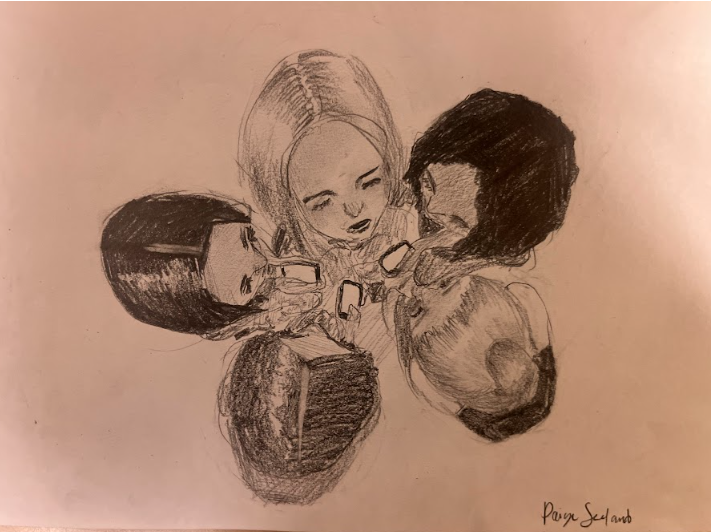
In the past decade, there has been a shift from face-to-face communication to conversations over the internet. One main factor contributed to this trend: the COVID-19 institution of “social distancing” became the standard. Many were forced to work and learn online, isolation was inevitable, and people connected through the screen on social media platforms.
The pre-pandemic norm was full of interaction, but after the pandemic many became more socially awkward. Social anxiety increased by 25.6%, mental health sharply declined, and those diagnosed with Social Anxiety Disorder (SAD), a phobia of social situations and judgement, were impacted negatively in their interpersonal relationships and life. The pandemic worsened risk factors for SAD, including the avoidance of social situations and low social support.
Because people weren’t forced to personally interact during COVID-19, online communication became stronger than ever. Recreational screen time increased by 1.75 hours a day; for reference, the average hours started at 4.4 pre-pandemic and ended up at 6.6 in the early COVID-19.
Increased screen time created an alarming issue on how children were spending their time and what was happening behind the screen. It also brought attention to how this negatively impacts their health as social media uses addictive algorithms that decrease children’s attention spans.
POST-COVID-19 COMPARISONS
The COVID-19 pandemic managed to completely transform interpersonal relationships, especially in school settings. During quarantine, social media apps allowed for a new form of connection. These apps allowed people to watch whatever they wanted and to consume a virtually unlimited amount of media.
This made the transition from online school back to in-person school difficult, since it reduced the population’s overall ability to communicate. Getting back to school and maintaining a strict routine proved difficult for many; what was even harder was integrating back into extracurricular activities.
These problems continue to impact schools, especially when it comes to high school relationships. The usage of personal technological devices is at an all-time high in schools – to combat this, the Missoula County public school board district implemented a new phone policy during the 2025-2026 school year. Many other schools globally have also followed suit.
This new cell phone policy has helped minimize some of the evident disconnect between students, teachers, and their peers, but it hasn’t completely removed the issue. Many students just simply find it challenging to maintain their focus on anything that takes longer or that simply does not engage them.
STUDENT RELATIONSHIPS
While COVID-19 had a large impact on how people interact with each other, there has also been an evident cultural shift. It has become far more normalized to be disrespectful towards peers and people in positions of authority. Being disrespectful is more common (and sometimes even encouraged).
Post-pandemic, this shift can be seen in both in-person and online. Almost 40% of youth say they’ve been bullied, and around 18% of youth have experienced cyberbullying.
And it’s not just their peers that may be bullying them. Social media opens up an ample opportunity for anyone to cast hatred towards others. This type of bullying is especially prominent in teens who choose to post and interact with social media apps, such as TikTok.
Of course, these problems cannot be blamed fully upon the adolescents who engage with hateful content. Social media has become ingrained into everyday use because of its popularity. It provides instant gratification and entertainment, making it highly addictive if abused.
This has created a much more negative environment overall, as school lacks its previous appeal of some forms of social interaction. This environment is amplified even further by the fact not many students actually are excited to learn the subjects presented to them. This is especially true in core curricular classes that are required for graduating from high school.
Many schools are attempting to slowly fix this issue, especially through implementing new policies and rules regarding phone use. While these policies may not be perfect, they are a step in the right direction. They aim to help people return to in-person communication, where teachers, students, and their peers all feel more comfortable with each other and better connected.
TEACHER RELATIONSHIPS
At Sentinel High School, many teachers have great relationships with their colleagues, especially those in similar departments. While they might not always work together, the environment at Sentinel is friendly and welcoming among staff. Teachers have also been able to maintain professional and strong relationships with their students, pre-pandemic to the present.
Many teachers at Sentinel agree that COVID-19 had its effects on students through technology, physical attendance, and overall interactions. Tammi Allison, AP Language and Composition teacher, finds that students were “on their phones a little bit more” before the pandemic compared to after, and notes that there’s a “callout culture” among students.
“So once upon a time, pre-COVID-19, we had a 10-day rule. If a student was absent more than 10 days, they lost credit… if there was a medical emergency, those didn’t count towards the 10 days, nor did school sponsored things. We no longer have that rule. And that, I think, actually started shifting before COVID-19…but then post-COVID-19 has just blown up.”
Allison struggles to help kids that are absent from school without any communication. She values hard work and believes that students “can get as good of an education as [they] want”. In Allison’s Advanced Placement class, students are more engaged in the material; however, in her normal English classes she notices that engaged and proactive students feel more like “outlier[s]” than anything else.
Sentinel Chemistry teacher Beth Rugh notes that students have improved with online communication through emails and Google Classroom due to the pandemic, and she enjoyed the more relaxed phone policy before COVID-19. From observations of her classes, she states, “kids are always either nice to each other or mean to each other, and they always come into my class, either knowing each other and having preconceived notions or not.” If “they don’t know each other, [they] have no desire to get to know anyone they don’t already know”.
Alyssa Johnson, Family and Consumer Science (FACS) teacher, taught middle school during pre-pandemic and has been at Sentinel for two years. She thinks that it’s unfair to compare classes since student interaction depends on the individual and the grade level that they experienced the pandemic.
“Social components were in place before COVID-19, and then they kind of went away and then were reintroduced. And so I think that…impacted [students], but I do think that there are continued opportunities for them to find a community.” Johnson also notes that technology use wasn’t specifically impacted by COVID-19, and would have increased over time regardless.
In upcoming years, Johnson is hoping for Family Career and Community Leaders of America (FCCLA), stating that it is “a career technical student organization that is to promote the fields of family consumer sciences, which is like interior design, hospitality, and tourism, food and nutrition, and then fashion and merchandising.” Students are able to “do workshops and different types of events” to “build a product to participate in competitions with”. Organizations and clubs like this can help students find a community within school, while doing something they’re passionate about.
Michelle Manning is another FACS teacher at Sentinel who enjoys being part of the community. “It’s a big staff. So I think especially being a small department, we can feel like we’re on an island, but… we have a lot of, like, monthly staff socials, department socials, and I think it’s just a really collaborative and like, positive workplace.”
Manning describes her teaching style as a “person-center teacher”, in which she “gets to know [her] students” and their learning styles to base her curriculum. Before COVID-19, “communication was less virtual and more in person because attendance was a little better”.
However, during the pandemic, there was a “surge of online learning” where she was “teaching synchronously” through email and Google Classroom. She adds that the cellphone policy is complicated since it helps classroom management, but Manning also believes that students should be able to self-regulate their screen time.
Spanish teacher Josh Rosenberger taught university students in various language classes before COVID-19 and has been at Sentinel for five years. He started the day Sentinel went remote, but was quickly required to transition to online instruction. He notices students have become more dependent on technology, but this shift isn’t fully attributed to COVID-19. He finds the phone policy to be beneficial, especially since it’s being enforced.
While Spanish is an elective, he finds that students “didn’t necessarily choose it as their first choice” due to there being only one French teacher or other reasons. Between Spanish and Speech and Debate, Rosenberger tries to listen to his students to create a positive relationship and classroom environment.
Denise Kundig, Math teacher, “think(s) before COVID-19 and after COVID-19 are about the same” in terms of interaction. However, she didn’t like the lack of communication during COVID-19 with her students. When students return to school after being absent, Kundig tries to make every student feel welcome when they enter the classroom.
Joe Fischer, a social studies teacher at Sentinel High School, believes that students “lost some of their skills in interpersonal communication, and certainly teachers did too”. He applauds the administration for their phone policies, but found that the students that were mainly on their phones in class weren’t able to build a relationship with their peers or teachers. Although, these trends aren’t fully attributed to technology: “I’ve had classes with fantastic students and really good people, but nobody wants to talk. And that goes back 30 years.”
Fischer also works with Key Club where the energy is different than in his core academic classes. Club members’ willingness to participate to achieve a certain goal without being graded or judged for their work is something to be celebrated.
Theatre and English teacher Katie Cassidy notes that there was more communication pre-pandemic due to stricter attendance, but it also doesn’t “feel like anything has changed that much”. Before COVID-19, Cassidy didn’t have much interaction with other teachers since her classroom is more secluded. However, she finds that student interactions are “getting back to normal” with events and hangouts among theatre students.
Since theatre is an elective, students choose to attend the class that they enjoy. Most of the time, she “get(s) to see students start as a freshman” and will “be with them all the way through their senior year”. This causes her to have a relationship with these students that is different from teachers who only have their students for one year.
Biology teacher Lindsey Manzo elaborated on some of the issues present in the classroom by explaining that both adults and students in the past decade who experienced COVID-19 are suffering from lower attention spans. Manzo makes it clear that a huge part of this lower attention span has to do with adolescents still developing, stating that “if you don’t ever learn to have good solid attention capabilities, it’s hard to ever revert back to it. Your brain gets less elastic as you get older, so it’s a harder skill to learn”.
COVID-19 ended up having a large impact on this, as the majority of people’s time went towards online interactions, and short form content. She has made it clear that teachers’ attention spans also suffered because of this, but they have had an easier time recovering from it.
Something Manzo has observed as well is that as the year continues, this disconnect between students and their work gradually disappears. She relates this to two things: the first is the transition from summer break back into school, and the second being how cliques begin to break down as the school year progresses.
Post-pandemic, Manzo talks about how most students now gravitate towards their phones. She primarily attributes this to how versatile and interesting phones have become in the last decade. According to her, “people felt connected even more through social media and defaulted to communicating through social media even more than they did. And so now that’s just the habit that’s been created.”
This habit is hard to break away from, and it creates an evident disconnect between teachers and students. However, Manzo adds that this changes over the course of the year, and isn’t necessarily true for all students.
CHARTS
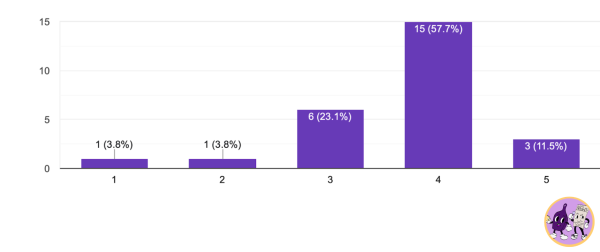
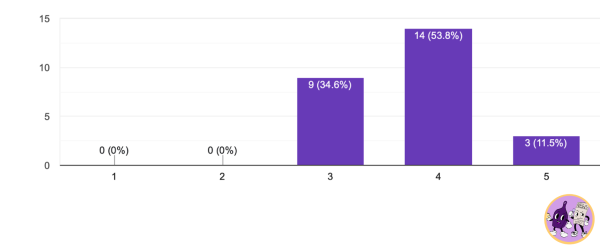
In a brief survey, faculty at Sentinel High School were asked to rate statements based on their experiences in the classroom. While most didn’t find a dramatic difference, it is concluded that COVID-19 did have an effect on student and teacher interactions.
Student communication in-person with teachers is strong (Before COVID-19)
Student communication in-person with teachers is strong (After COVID-19)
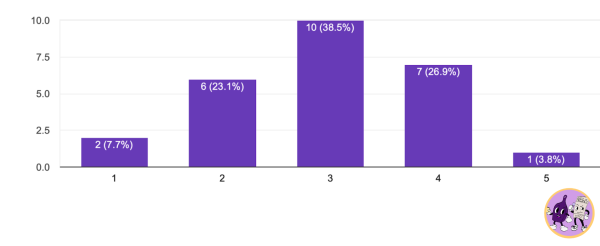
Student communication among teachers and students were stronger before COVID-19 in comparison to after; while there wasn’t a significant difference, there was a decline in teacher and student conversations face-to-face.
Students communicate well with each other in class (Before COVID-19)
Students communicate well with each other in class (After COVID-19)
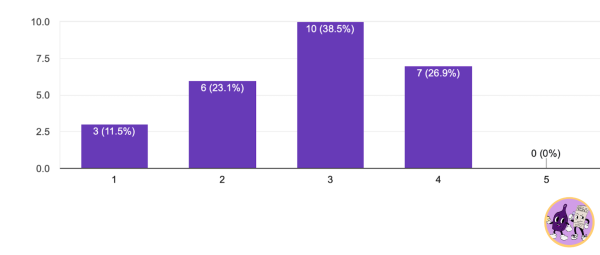
From a teacher’s perspective, student interaction among their peers significantly deteriorated in comparison to pre-pandemic. Before COVID-19, communication among students was very strong, but became weaker after the pandemic.
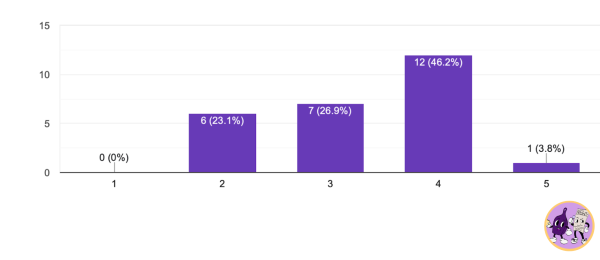
Students have a strong attention span in class (Before COVID-19)
Students have a strong attention span in class (After COVID-19)
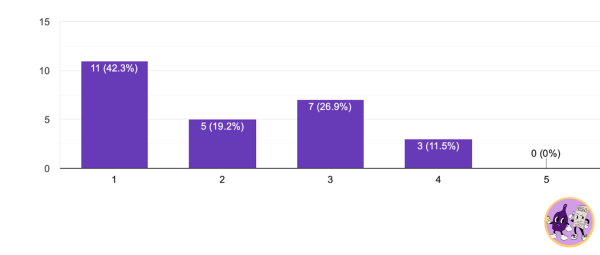
At Sentinel High School, students’ attention span had the largest shift pre-pandemic and post-pandemic, with student attention spans being lower than ever after COVID-19.