



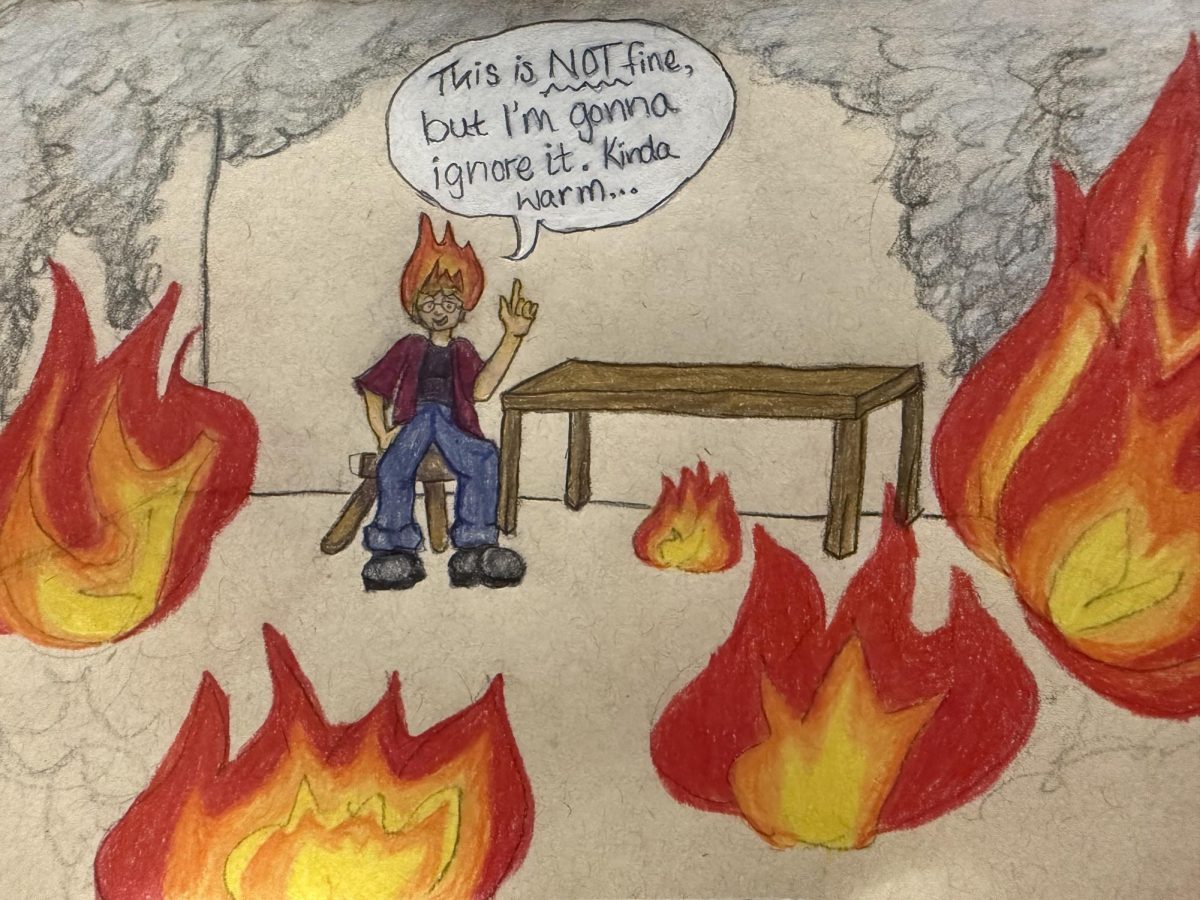
It’s everywhere; around every corner – every classroom – every vending machine. No one can escape the ever present call of America’s most unassuming addiction: caffeine.
At Sentinel High School, an average walk through the school will yield energy drinks and overpriced coffee in the hands of at least 90% of all students and teachers. This is an accepted normal; to some people, a healthier normal. Well, at least it’s not cigarettes, right?
Ignoring the outrageous vape usage within Sentinel’s walls, smoking cigarettes just isn’t cool like it used to be. Surely, anyone could hypothetically catch a teenager smoking a cigarette in an alley nowadays, but a vape is way more discreet. A kid can’t just whip out a cigarette in the middle of science class and take secret puffs from the depths of their sleeve like they can with a vape.
Even with all the penalties and restrictions, especially on tobacco and nicotine, nothing can stop the impenetrable will of a rebellious teen. So, logically, if students could get a… less bad… fix from somewhere else, wouldn’t schools be all for supporting the distraction? Yes, they would.
Enter, the energy drink: tasty, efficient, vaguely reminiscent of battery acid, and most importantly of all: wrapped in aesthetically pleasing packaging and advertisement. Seems to hit all the marks of a rather different teenage addiction, no?
Everyone knows the history of the tobacco industry. Everyone knows they made a point to advertise to kids and teens with candy, false health claims, and appealing aesthetics. So, everyone also knows that smoking cigarettes between 1920 to 2000 was one of the coolest things a teen could do.
Such as teenagers are wont to do, they were immediately hooked on a trend. Stereotypes were formed – such as the “bad boy”, the “rebel”, the “greaser”, the “cool kid”, the “artist”, etc., etc. – with cigarettes front and center. The social aspects of smoking bloomed into a requirement at any worthwhile gathering. Parties, ragers, hangouts, or… schools?
Yup. Schools. At some point, schools realized that smoking was bad. Doesn’t mean they stopped. Thinking logically (to save the youth), “smoking zones” were moved outside.
There really isn’t a solution more perfectly suited for a public high school than this. In the board meeting, some guy was probably like: “Yeah, so, you know this thing that’s bad for the kids? Oh, no, we’re not gonna ban it or anything, let’s just make it a little less bad by moving it outside! We’ve saved the new generation!”
A similar “make it a little less bad” approach has been taken towards caffeine, but with the effects of tobacco and nicotine usage in schools lingering, it doesn’t feel like repeating history. It feels like a better alternative to a bigger problem. There’s nothing a school does better than slapping a “bandaid solution” over a “gaping wound issue.”
And suddenly, we’re back to the present, and adolescent anxiety is at an all-time high, but energy drinks and high caffeine beverages are encouraged. In Sentinel alone, there are three vending machines (two of which have energy drinks), two markets with caffeinated beverages, and a coffee cart run by parent volunteers.
Gift cards to the Sentinel coffee cart and those surrounding are even given out as school rewards, funded by the school administration that “can’t fund” a new theater for the flourishing art departments or updated bathrooms for the thousands of students who attend Sentinel.
But, on the brighter side, the kids aren’t complaining. Caffeine is tasty, and all the better to crank out missing assignments or make the monotony of school a little more bearable.
As a matter of fact, I wrote this entire article hopped up on Loose Caboose Lotuses. Shout out Loose Caboose, I would not survive high school without you. But I can quit whenever I want to. Seriously, I can.