



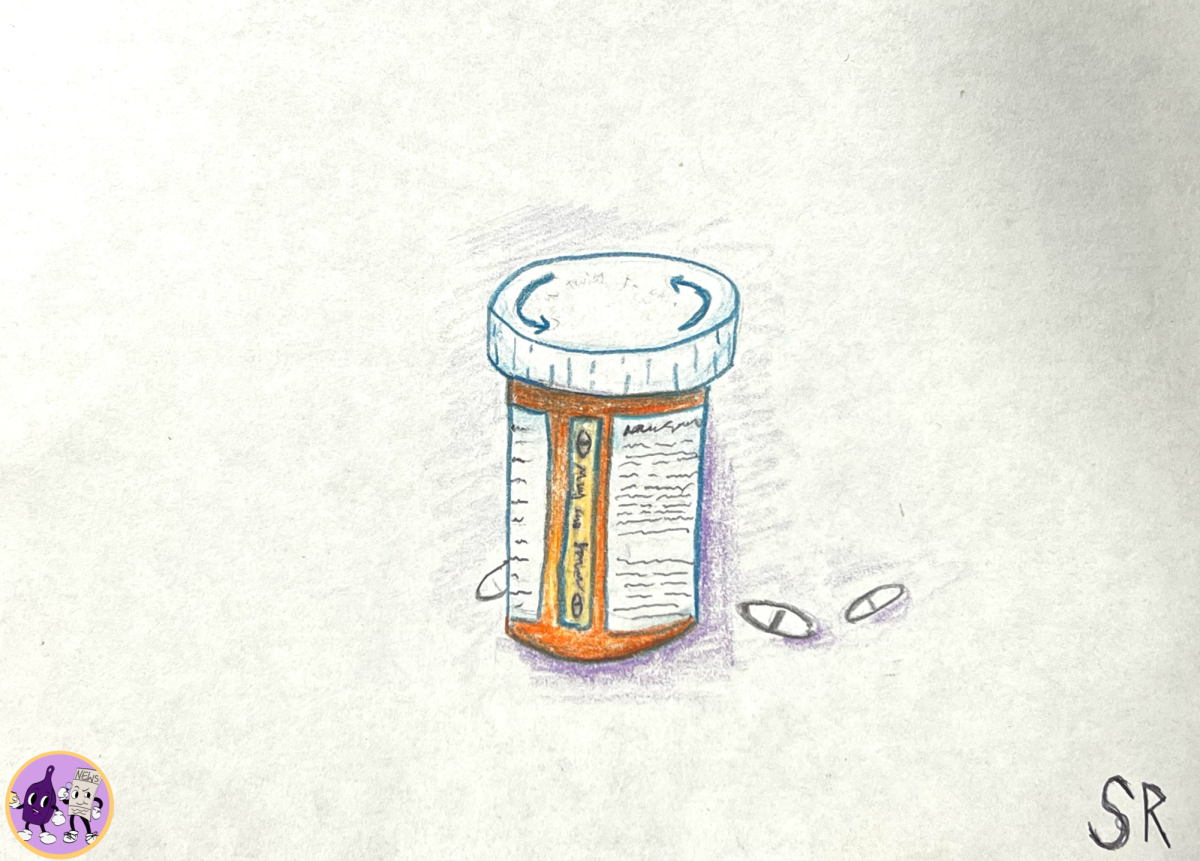
All around Sentinel High School in Missoula, Montana, there are posters lining the halls highlighting the negative effects that drugs have on young adolescents. Maybe due to the posters being a dull white, are they being ignored by the students at the school.
According to vice-principal Dana Young, Sentinel High School’s administration has caught multiple students in possession of drugs, and many have already faced both in school suspension (ISS) and out of school suspension (OSS).
At Sentinel High School, the Administration does its best in order to enforce the drug policy that they have to uphold while trying to still provide support to the students that need help. In the Student Handbook, the administration laid out a few ground rules regarding the use of drugs on school property.
The lightest punishment a person can receive for being found in possession of drugs is a possible day of ISS. The student has to participate in the diversion program (Calibrate),which allows the students to avoid criminal conviction by completing specific requirements. The student is also referred to either the counselor or one of the school’s social workers.
The harshest punishment that someone can receive that was given from the handbook was six days of OSS and one day of ISS with citation. Along with that, they must be referred to the counselor or a social worker weekly for the rest of the year and must participate in Calibrate.
Of course, the administration must perform certain procedures in order to ensure no false accusations are made for students. Mrs. Young claimed that if teachers or admin obtain knowledge of individuals having or distributing illegal substances on campus, they are required to refer to the School Resource Officer (Officer Monaco) and organize a Threat Assessment Team to conduct a Threat Assessment Screener to determine what to do next. During the investigation, the suspected student is pulled out of school and placed on emergency suspension.
Sentinel High School piloted a program called INDEPTH that is now being implemented district wide. This program is an alternative to a suspension or a citation, given that those consequences do not address the root of the problem.
Along with this help, Sentinel has also been trying to help students feel more comfortable with reporting if they have concerns about substance use, abuse, or distribution within the school community. The administration is encouraging students to use the Safer MT Tipline, which allows any community member to report concerns anonymously and safely.
Drugs have always been a problem in society. In the early 1970s, America started its War on Drugs, and faced a large retaliation and was briefly put on hold. It wasn’t until later 1980s when America, under the leadership of former President Ronald Reagan, began to reinforce and expand on the former ‘anti-drug’ policies.
In 1986, his administration passed the Anti-Drug Abuse Act, granting $1.7 billion for law enforcement to grapple with the drug war and establish mandatory minimum sentences for drug offenses. In 1994 President Bill Clinton passed the Crime Bill. $30 billion went into 125,000 new state prison cells, mandated life sentences via three-strikes laws, and added new crimes worthy of the death penalty. The number of people locked up for specifically non-violent, drug-related crimes rose from 50,000 to 400,000 from 1980 and 1997.
In terms of adolescence, the general public was left unaware of the harm that drugs could cause up until the late 1980s, which was around the same time as the Anti-Drug Abuse Act. The general public was swayed by both the government and the news sources to focus more on the rise of harm-reduction policies.
In Missoula, drug stores and casinos are found scattered all over the streets. Drugs are more available, and are easier to purchase for the general public as well. There are around 59 dispensaries in Missoula County, with research finding a 22% increase of teen usage along with the rise of pharmacies.
When adolescents abuse drugs, they experience a wide array of problems, including academic difficulties, health-related issues, poor-peer relationships, and possible involvement with the juvenile justice system. On top of this, there may be consequences for their family members, fellow friends, or their community.
While taking drugs, students may notice a serious tank in their grades, more absences from school and from other activities, and increased potential for dropping out. Cognitive and behavioral problems experienced by a drug nursing youth may interfere with their academic performance and may also present issues to learning to their fellow classmates.
In regards to health, mental health has taken center stage, especially during the developing stages of the brain. Problems such as depression, developmental lags, apathy, withdrawal, and other issues are linked to substance abuse among younger adults. Youths who are addicted tend to be at a higher risk for mental health problems, and may have memory problems as well. Motivation and emotional development may also be influenced by the amount of drugs as well.
Today’s society is glorifying the usage of drugs. In music videos, the viewer will see the artist actively taking the drug. In most mainstream and popular films, the lead actors and actresses are allowed to get risky and drunk, surrounded by alcohol and making jokes about it.
Adolescents may not realize it, but they are being sterilized to the idea of taking drugs, and getting drunk. However, it couldn’t be further from the truth. Substance-abusing youths are more often alienated from their peers and are disengaged from their school and community activities, further deepening the rifts.
The administration at Sentinel has recognized drug usage as a problem, one that needs not only to be addressed, but one that needs to be heard.However, the school is having trouble with finding ways to reach out to the students without