



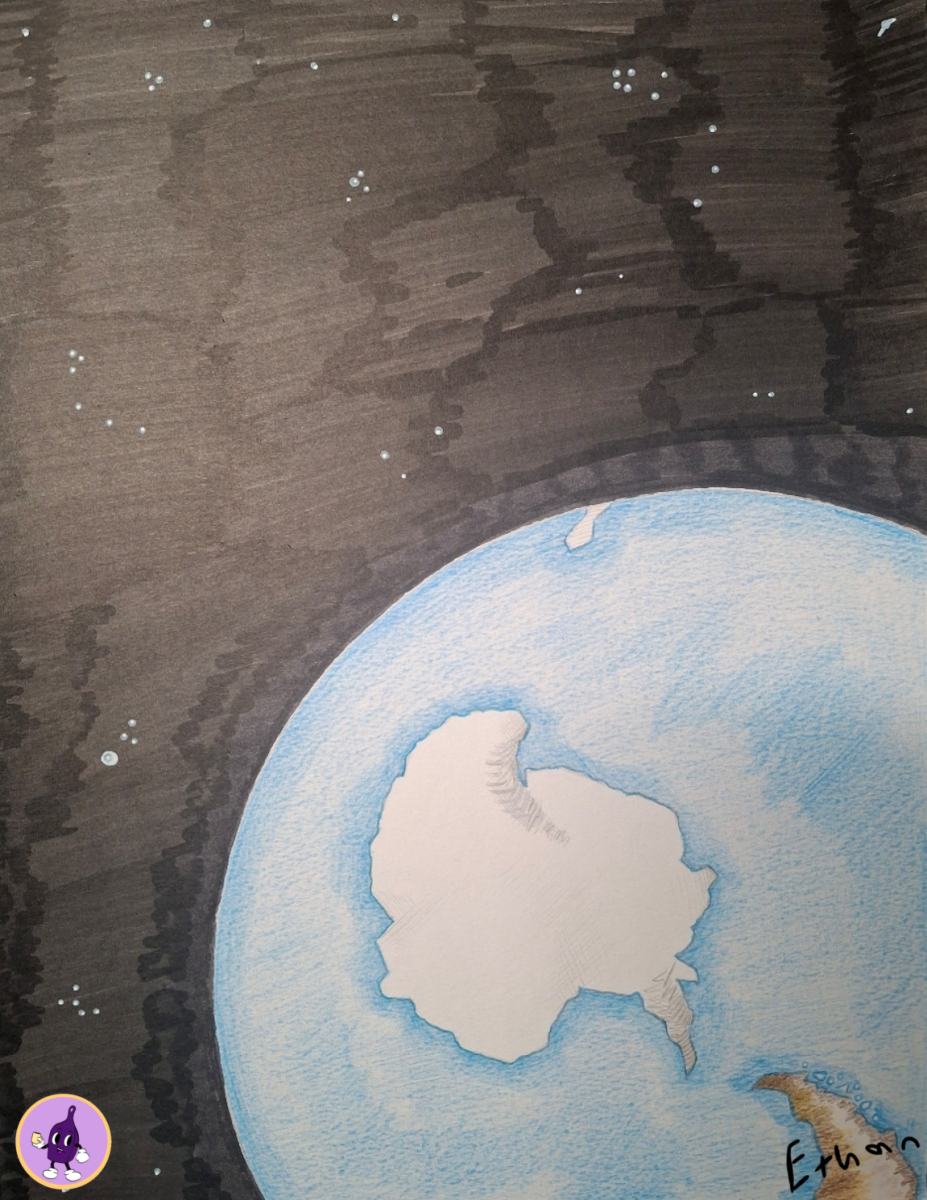
It has become common knowledge that the polar ice caps are melting due to global warming. What many people don’t know is the various effects that disappearing glaciers have on the Earth as a whole.
There are multiple reasons scientists have acknowledged this occurrence, with the most notable repercussion likely being the ever-rising sea levels. This is caused by multiple factors, only one of which is from thawing glaciers. The second component is that as the globe heats, the oceans do as well. When water heats, as with all atoms, they spread out. This causes the water to be less dense, but to take up much more surface area.
The increased heat is related to the melting of glaciers. The ice in the cryosphere, the Earth’s poles, helps to reflect heat from the sun due to its bright white color. This allows the heat to be contained within the Earth’s ecosphere. In the ecosphere, the heat spreads to other areas of the world through the air. While the ice and snow melt more and more heat is absorbed into the polar regions, which in turn causes more to melt.
NASA, along with monitoring outer space, also monitors the oceans. They found that sea levels have risen roughly 93.4 millimeters (3.68 inches) between 1900 and 2018. In recent years, the sea level has increased rapidly, primarily due to global warming.
Sea level rising has been closely intertwined with glacial melting. However, many other potentially more dangerous elements have been discovered.
One of these elements being the release of greenhouse gases into the atmosphere. Soil has been trapped beneath ice and permafrost (meaning permanent frost or ice), and while the frozen ground thaws the gases trapped in the soil release carbon dioxide and methane.
These gases are commonly known to amplify global warming when emitted. Similar to the melting of snow and ice, this gas being released acts as a catalyst towards global warming.
Along with greenhouse gases, dormant bacteria have been released. This bacteria has been found in some of the glaciers of the world, even so, it is more commonly found in the thawing permafrost.
Due to the length of time permafrost was meant to last, it became an ideal place to plant dangerous pollutants and radioactive material. As it melts, these materials are released, along with the rest of the dormant elements.
Permafrost has existed far longer than most ice in the world, meaning that while humans have evolved to be immune and created vaccines to render many illnesses useless, the microbes in permafrost are ancient. This leaves humans vulnerable to potential illness as they are released.
The bacteria in the ice can be embedded in things that have been long frozen that can be vessels for diseases. According to the Columbia Climate School in 2016, nearly a hundred people were hospitalized in Siberia due to anthrax contracted from a 75-year-old frozen reindeer that was exposed because of the melting permafrost. These types of viruses do not just affect humans, they can impact animals and plants as well.
Earth only has roughly 2.5% of freshwater compared to salt or undrinkable water. At least two-thirds of this freshwater is contained within glaciers, making it nearly unobtainable; with the melting humans have easier access to the natural water inside.
Glacial runoff also affects local biodiversity in both positive and negative ways. It can alter many ecosystems, changing both the amount of water in a region and the temperature of the water, which can have an effect on sensitive aquatic life. However, due to global warming, many ecosystems are in need of temperature regulation as well as an increase in hydration.
This runoff takes place whether the ice melts prematurely or not. While this water is useful at this moment, in the long run many problems will arise due to the melting. The main one being that the glaciers are not everlasting, so when the last of the water has melted, all of the runoff needed to sustain life around the arctic poles will be helpless.
Montana, being a northern state, has glaciers many of which are located in Glacier National Park. One of the biggest impacts this has on not only the park but Montana and even surrounding states, is that due to the lack of ice there is less to melt in the summer.
The melting ice in the mountains is one of the main ways that the soil gains moisture and water beds rise protecting the environment from wild fires. Without this increase in moisture, the forest is much more likely to burn.
Montana’s government and society is heavily impacted and involved in its natural environment, the effects of global warming and glaciers melting damages this environment along with the human population of the state.
There are many social and political matters connected to melting ice caps. In 2023, Ohio State University PHD candidate Allison Chartrand stated that “Mountain glaciers in particular are important water resources, and they have important cultural significance for indigenous people.”
Along with cultural significance, the thawing permafrost has a very direct and physical effect on many communities in the north. Alaska and Greenland are two of the most publicised locations affected due to their population.
Due to the permafrost’s longevity, it led people to cultivate the land and build houses and towns upon it. However, as the permafrost thaws the villages are put in great jeopardy. The melting leads to unstructured foundations, houses falling completely, and often sinking foundations.
Most (if not all) of the positive effects of ice cap melting pertains to humans and more specifically the economic environment.
Shipping passages that need to travel north can cut corners that were previously obscured by icebergs. This allows for the ships to take both less time and less fuel to reach their intended destination. This in turn limits their greenhouse gas emissions by 24%, according to Columbia Climate School.
While this limitation of emissions does assist in the battle against global warming, transfer ship emissions are not the main cause of greenhouse gas pollution. The main factor of emissions is industry work including oil and fuel processing, manufacturing, and damaging land use concerning agriculture and forestry.
Scientists have been working on many different ways to help prevent the ice from continuously melting. One of the ways is by creating what is essentially a large underwater blanket in order to stop the ice from being eroded from the warming ocean water.
They intend to moor the prototype of this curtain to the base of the Amundsen sea off the coast of Antarctica. This is currently one of the only ways that glacial melt is being prevented. The ways to truly stop or slow it are all closely related to the variety of ways to slow global warming.